

Reliability of Roll Chocks: A Systematic View from Material, Heat Treatment to Acceptance Control
2026-08-31 08:30Reliability of Roll Chocks: A Systematic View from Material, Heat Treatment to Acceptance Control
Roll chocks (bearing housing) are the key load-bearing components that connect the roll, the bearing, and the rolling-mill housing. Their long-term stable operation is not determined by a single dimension, material, or process, but by the combined effect of material quality, manufacturing route, heat treatment, non-destructive testing, machining accuracy, assembly lubrication, and rolling conditions. "Machining to drawing" only means the manufacturing has a geometric basis; it does not mean reliability risks have already been controlled. Procurement and technical personnel should bring material, heat-treatment condition, inspection of critical areas, dimensional and geometric accuracy, and traceable records together into the technical agreement.
1. Why "Machining to Drawing" Does Not Mean Reliability Is Controlled
In the maintenance workshops of cold rolling mills, hot rolling mills, aluminum foil rolling mills, and aluminum strip rolling mills, one sometimes encounters this: roll chocks with similar structures and identical drawings show inconsistent service performance. Some remain stable for a long time; others develop fit-surface wear, dimensional drift, local cracks, or abnormal heating earlier than expected.
Such differences cannot be simply attributed to "poor dimensional accuracy," nor can a single failure be used to conclude that the material or heat treatment is problematic. Rolling force, impact load, roll-bending force, bearing condition, assembly clearance, lubrication and cooling, housing stiffness, and maintenance interval may all participate in the failure process. A more reliable approach is to analyze manufacturing records, inspection results, and field conditions together.
If the drawing only gives external dimensions and tolerances, but does not specify material grade, delivery condition, heat-treatment requirements, inspection method, and acceptance level, even if the supplier "completes to drawing," there may still be quality differences between products that are difficult to identify by appearance. Common risks mainly include:
| Risk point | Possible manifestation | Recommended control |
|---|---|---|
| Material inconsistency | Grade, heat/batch, or mechanical properties inconsistent with requirements | Verify material certificate, heat number, chemical composition, and mechanical properties |
| Casting defects | Shrinkage, porosity, inclusions, cracks affecting load-bearing reliability | Agree UT, MT, or PT inspection by critical area, per agreed acceptance level |
| Welding & residual stress | Insufficient welding quality or residual-stress control; later deformation or cracks | Assess welding procedure; apply heat treatment and inspection as designed |
| Strength–toughness mismatch | Only pursuing hardness; local brittle behavior or low impact resistance | Balance strength, hardness, and toughness per load and failure mode |
| Machining & assembly deviation | Bore coaxiality, parallelism, fit and locating accuracy insufficient | Define critical characteristics, inspection method, and assembly datum |
Conclusion: The service-life difference of roll chocks with the same drawing is often a combined result of "manufacturing quality + assembly maintenance + rolling conditions." When analyzing, avoid attributing it to a single cause.
2. Material Mainstream: Common Materials and Manufacturing Routes for Roll Chocks
There is no "best material" for roll chocks divorced from service conditions. Work-roll chocks, back-up roll chocks, and intermediate-roll chocks bear different loads, space constraints, roll-change frequencies, and cooling environments; cold, hot, and foil rolling mills differ in their emphasis on stiffness, wear resistance, impact resistance, dimensional stability, and maintenance convenience. Material and manufacturing route should be determined jointly by design calculation, existing equipment experience, and the technical agreement.
| Material / structure route | Common examples (illustrative) | General characteristics | Application & notes |
|---|---|---|---|
| Carbon cast steel | ZG270-500, ZG310-570, etc. | Good overall formability; suitable for complex or large structures | Focus on casting quality, heat-treatment condition, critical-area defects |
| Alloy cast steel | ZG35CrMo, ZG42CrMo class | Higher strength-toughness and fatigue performance | Stricter on melting, heat treatment, and consistency; grade per drawing & standard |
| Ductile iron | QT400-15 | Predominantly ferritic matrix; ≥400 MPa tensile, certain yield, good elongation; spheroidal graphite reduces stress concentration from sharp flake graphite | Candidate for some high-precision rolling-mill chocks; still verify load, stiffness, impact, section-size effects |
| Welded structure | Q235, Q355/Q345 plate, etc. | Suitable for large, non-standard, small-batch structures; flexible | Address base metal, consumables, groove, sequence, weld inspection, residual stress |
| Other design materials | Per original equipment or design | Some equipment may use specific cast iron, forged steel, or composite | Do not replace original design verification & technical agreement with generic experience |
About QT400-15: This grade is ductile iron (nodular cast iron). Per current GB/T 1348-2019 (which modifies ISO 1083:2018), "400" corresponds to the minimum tensile strength grade and "15" to the minimum elongation after fracture. Its property basis usually comes from a high proportion of ferritic matrix and good graphite spheroidization. For some high-precision cold rolling mills, aluminum foil rolling mills, or aluminum strip rolling mills, the chock must not only carry load but also maintain the stability of the bore pattern, locating surfaces, and center height over the long term; the designer may select QT400-15 after comprehensive consideration. But it should not be directly equated with "will not deform" or "necessarily more suitable for high-precision rolling mills" — dimensional stability is also affected by wall-thickness variation, spheroidization rate, matrix structure, casting residual stress, and actual thermal load. High-impact or very high-load conditions still require comparison with other material options through strength, stiffness, and fatigue analysis.
Note: The material table is only for building initial understanding and cannot replace material-selection calculation.
Statements such as "ordinary cast steel damps vibration well," "alloy steel must be more durable," "QT400-15 never deforms," or "welded parts must use a fixed annealing system" easily ignore structure, size, load, and process conditions. More valuable procurement questions are: why is this grade suitable for this mill type? What is the delivery condition and microstructure requirement? How are key properties verified?
3. Heat-Treatment Mainstream: Why Residual Stress and Microstructure Matter
Large cast steel parts and welded structures may develop residual stress during solidification, welding, and rough machining. If the microstructure and stress state are not properly controlled, dimensional changes may occur during later finishing or service; under combined cyclic load, impact, and stress concentration, crack risk may also increase. But residual stress is only one influencing factor and cannot be judged separately from material defects, structural design, and field conditions.
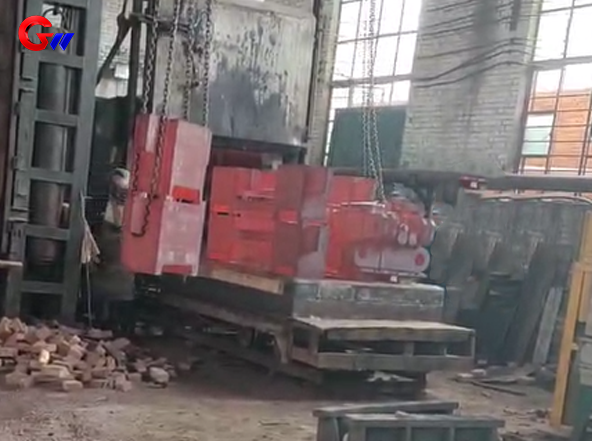
1. Stress relieving: The goal is to improve dimensional stability. For applicable castings or welded parts, stress-relief heat treatment reduces residual stress and helps keep subsequent machining and service dimensions stable. Whether to apply it, and what temperature–time regime to use, should be determined by material, wall thickness, structural constraints, welding procedure, and design requirements, with traceable heat-treatment records retained.
2. Normalizing, tempering, or quenching & tempering: Cast steel parts may use normalizing, normalizing + tempering, or other heat treatment per grade and property requirements; some alloy cast steels may use quenching and tempering per design. The process name itself does not prove quality; ultimately it depends on whether chemical composition, mechanical properties, hardness distribution, metallography, or other agreed inspection results meet standards and drawings.
3. Surface and local treatment: Whether the fit surface, sliding surface, or wear-prone area needs local strengthening, surface treatment, or a replaceable liner should be decided by structure and maintenance strategy. Over-pursuing local hardness may cause machining difficulty, stress concentration, or reduced toughness, so "harder is more durable" should not be a general conclusion.
Procurement tip: Do not just write "heat treatment performed" in the technical agreement. Specify the purpose, applicable standard, delivery condition, record requirements, and the mechanical properties or hardness range to be verified.
4. Different Mills and Different Chocks — Points of Attention Differ
| Object / scenario | Factors usually more worth attention |
|---|---|
| Work-roll chock | Roll-change efficiency, bore & locating accuracy, fit-surface wear, emulsion environment, assembly consistency |
| Back-up roll chock | Stiffness & fatigue reliability under high load, load-bearing-area defects, bore coaxiality, lifting & maintenance safety |
| Intermediate-roll chock | Space constraints of multi-roll mill, locating accuracy, roll-change convenience, coordination with shifting/bending systems |
| Cold rolling & aluminum strip mills | Stiffness, locating, dimensional stability related to strip shape & thickness accuracy; some high-precision schemes evaluate QT400-15 ductile iron; also protection in emulsion or rolling-oil environment |
| Hot rolling mill | Impact, thermal load, water vapor, scale environment; structural strength, sealing protection, maintenance convenience |
| Aluminum foil rolling mill | Vibration, assembly accuracy, lubrication cleanliness, stability under high speed, thin gauge, high precision |
5. What to Check in Machining and Maintenance of Roll Chocks
New manufacturing & incoming-material control: Input documents should include general arrangement drawing, part drawings, material & execution standard, rolling force or load spectrum, fit relationship, service environment, and original-part failure records. Process control includes incoming material re-verification, confirmation of key processes for cast or welded blanks, heat treatment, stress-relief/stabilization after rough machining, and NDT of critical areas. Here we distinguish "the casting/welding process of the blank supplier" from "the subsequent machining process": GW Precision undertakes the machining and inspection stage from blank to finished product; the quality of cast or welded blanks is confirmed by material certificates and incoming inspection.
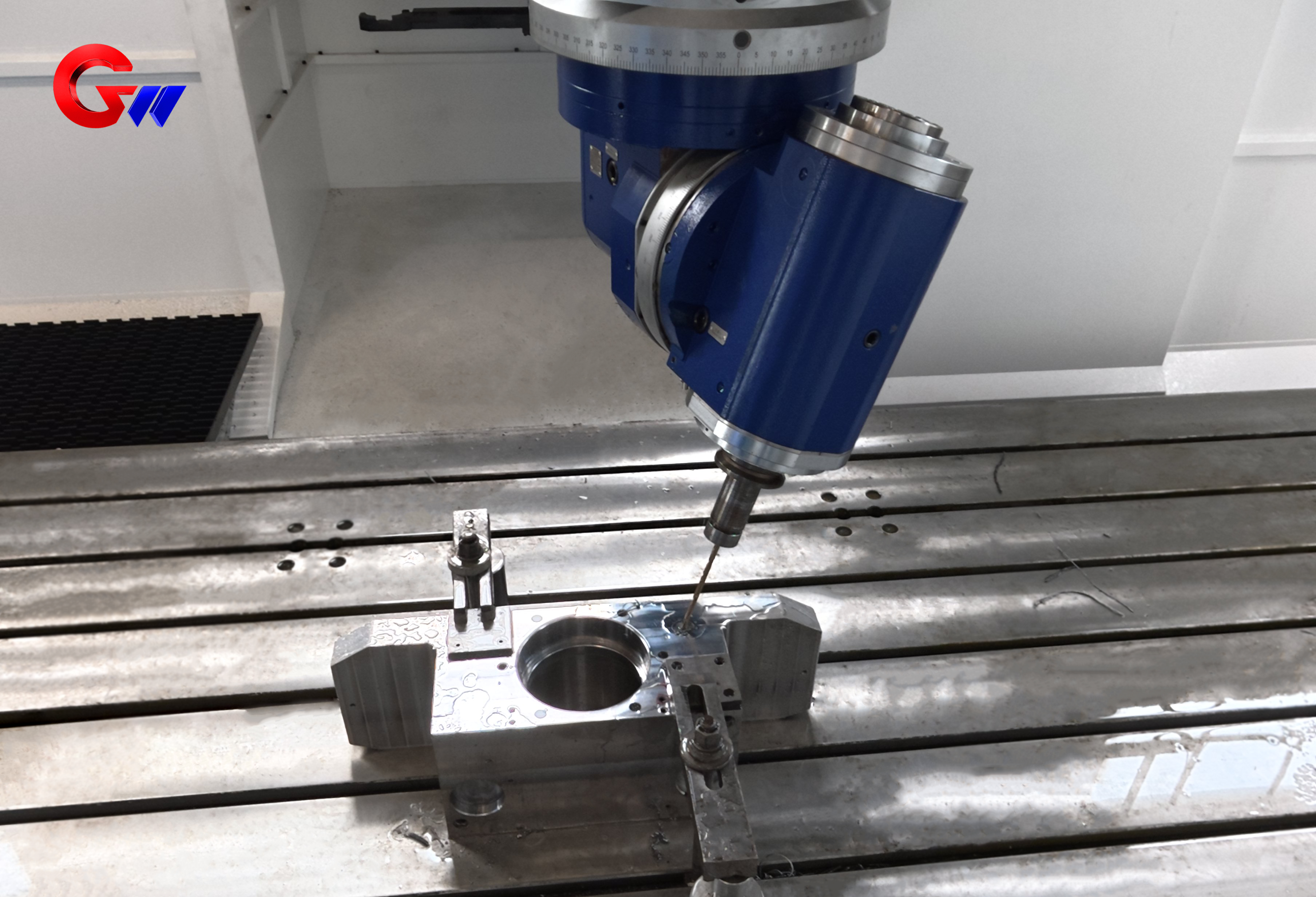
Machining: Roll-chock machining often involves large boring-milling, five-face machining, or multi-setup clamping. If the datum conversion is unclear, rough/finish machining allowance is unreasonable, or the workpiece stress state is unstable, even if individual dimensions are qualified, the bore pattern and assembly relationship may still be affected. Therefore inspection reports should be organized around functional dimensions and geometric relationships, not just external dimensions.
Maintenance: Before maintenance, identify material, defect nature, crack extent, remaining wall thickness, and deformation; for load-bearing-area cracks or major defects of unknown origin, do not directly weld-repair without engineering assessment. Post-maintenance dimensions, geometric accuracy, and NDT must also have clear acceptance criteria.
6. Procurement & Acceptance: A Ready-to-Use Checklist
For rolling-mill spare-part procurement, the clearer the inquiry document, the fewer disputes later. The checklist below can be used for technical communication on roll-chock manufacturing, machining, or maintenance projects:
| No. | Check item | Suggested confirmation to supplier |
|---|---|---|
| 1 | Drawing & conditions | Mill type, roll position, load, speed, environment, fit relationship, key functional dimensions complete? |
| 2 | Material & standard | Material grade, execution standard, delivery condition, heat number, material certificate mapped to physical item? |
| 3 | Manufacturing route | Casting, welding, or repair route? Key processes and outsourcing boundary? |
| 4 | Heat treatment | Purpose, process type, records, property-verification requirements clear? |
| 5 | NDT | Method, area, timing, proportion, acceptance level, report format? |
| 6 | Finish-machining inspection | Key bore pattern, locating surface, coaxiality, parallelism, center height — how measured & recorded? |
| 7 | Maintenance special | How to assess cracks & wear? Repair process, heat-affected zone, machining allowance, re-inspection standard? |
| 8 | Traceability & delivery | Material, heat treatment, NDT, dimensional inspection, photo records form one-file-per-piece? |
Acceptance principle: Do not only ask "can it be installed," but also ask "what material it uses, what key processes it experienced, and on what records it proves compliance."
7. FAQ: Common Questions from Procurement and Equipment Personnel
Q1: Is a harder chock more durable?
Not necessarily. A chock needs a balance among strength, hardness, toughness, stiffness, and machinability. Too high hardness with insufficient toughness may increase brittle-failure risk; insufficient hardness may accelerate fit-surface wear. The target should be meeting the drawing and actual load requirements, not pursuing a single maximum value.
Q2: Which is better, cast steel chock or welded chock?
There is no absolute answer divorced from structure and conditions. Cast steel suits complex integral structures; welded structures suit large, non-standard, small-batch manufacturing. Both can yield reliable products, and both can fail due to insufficient process control. Compare design adaptability, manufacturing capability, quality records, lead time, and full-lifecycle maintenance cost.
Q3: Is "machining to drawing" from the supplier enough?
If the drawing fully specifies material, heat treatment, inspection, and acceptance requirements, working to drawing is the basic principle; if the drawing information is insufficient, it should be supplemented through the technical agreement. For surveyed old equipment or imported rolling-mill spares, further distinguish "dimension replication" from "function restoration," and supplement with material testing, failure analysis, and field-condition review when necessary.
Q4: Is NDT reliable once it is performed?
Not exactly. The effect depends on whether the method is suitable, the inspection timing, coverage area, equipment and personnel capability, sensitivity setting, and acceptance standard. Magnetic particle, penetrant, ultrasonic, and radiographic testing each have applicable boundaries; a bare statement "inspected" cannot replace a specific report.
Q5: How to quickly judge whether a roll-chock supplier is professional?
Observe whether the other party can communicate specifically around drawing, conditions, material, heat treatment, inspection, machining datum, and acceptance records — rather than only promising price and lead time. A professional supplier is usually willing to state risk boundaries and can provide process and inspection data corresponding to the physical item.
Q6: Is QT400-15 more suitable than cast steel for high-precision rolling-mill chocks?
It cannot be generalized. QT400-15 has application value in some high-precision rolling-mill designs; cast steel may have advantages under high load, strong impact, or specific fatigue requirements. The correct approach is to compare through design based on rolling-mill load, chock structure, allowable deformation, dynamic response, maintenance method, and original equipment material specification — not to substitute by grade alone.
Conclusion
The actual service life of roll chocks is jointly determined by design, material, manufacturing, heat treatment, inspection, machining accuracy, assembly maintenance, and rolling conditions. Obvious differences among products with the same drawing are not mysterious: beyond the drawing there are still many process variables to be identified, recorded, and verified. For purchasers, the most effective risk control is not only to suppress price, nor to mythologize a certain material grade, but to write key requirements into the technical agreement and complete the acceptance closed loop with traceable documentation.
Luoyang GW Precision Technology Co., Ltd. conducts machining, maintenance, and technical communication around roll chocks and related rolling-mill spare parts. Facing work-roll chocks, back-up roll chocks, intermediate-roll chocks, and different applications such as cold, hot, foil, and aluminum strip rolling mills, we pay more attention to the match between drawing and conditions, the verifiability of key processes, and whether stable assembly and maintenance can be achieved after delivery.
This article is compiled by GW Precision for rolling-mill equipment, procurement, and maintenance technical personnel, introducing common quality-control logic of roll chocks in material, heat treatment, machining, and maintenance. The material grades and process routes herein are for general illustration only and do not constitute a design substitute or life commitment for specific equipment. For actual projects, please refer to equipment drawings, applicable standards, and the mutually confirmed technical agreement.