

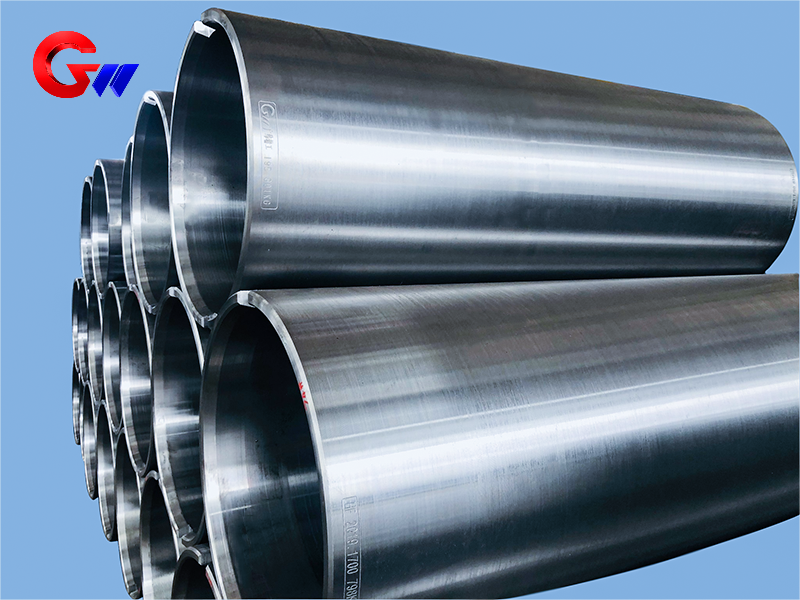
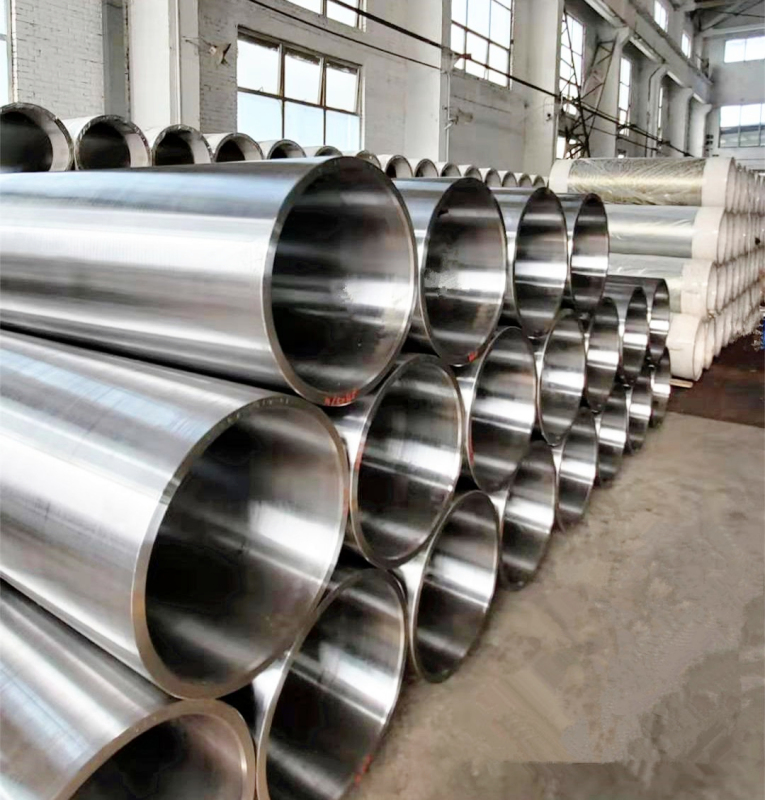
Casting Steel Spool Used In Rolling Mill Machine Of Copper Foil
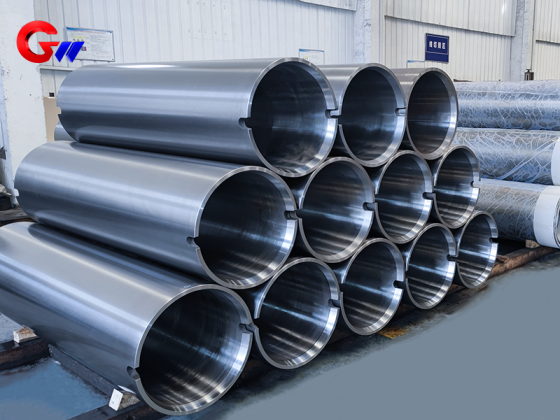
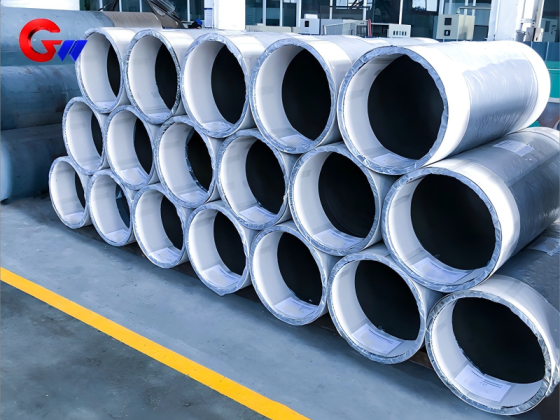
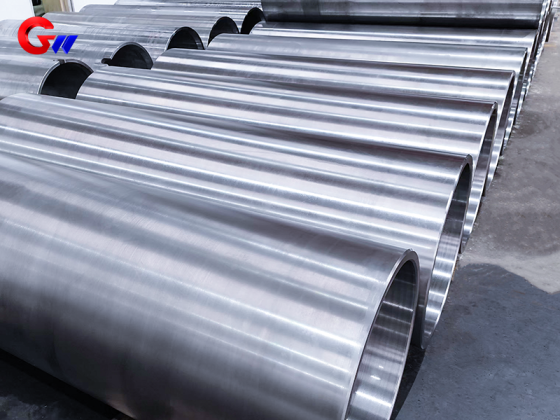
35CrMoV casting steel sleeve for copper foil rolling mills, manufactured with centrifugal casting, heat treatment, dedicated hole drilling, precision CNC machining and 100% dynamic balancing inspection. Customized specifications include 565×505×1600 mm and 665×605×2000 mm, with mechanical properties and geometric tolerances controlled according to customer requirements.
- GW Precision
- China,Luoyang
- Contractual Stipulation
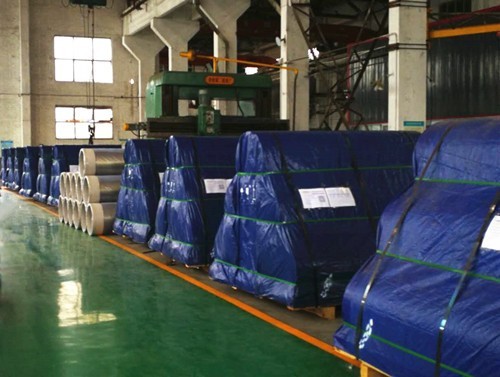
- Anual Capacity of Steel Spool is 4000 pieces
- Information
Casting Steel Spool Used In Rolling Mill Machine Of Copper Foil
| Casting Steel Spool | Material | Specification |
| Used In Rolling Mill Machine Of Copper Foil | 35CrMoV | 565*505*1600 |
| 35CrMoV | 665*605*2000 |
The casting steel sleeve is a large precision mechanical component used in copper foil rolling mill equipment. GW Precision manufactures customized steel sleeves according to customer drawings, material requirements, dimensional tolerances and geometric accuracy requirements. For this product, 35CrMoV alloy steel is used as the material, with available specifications of 565×505×1600 mm and 665×605×2000 mm.
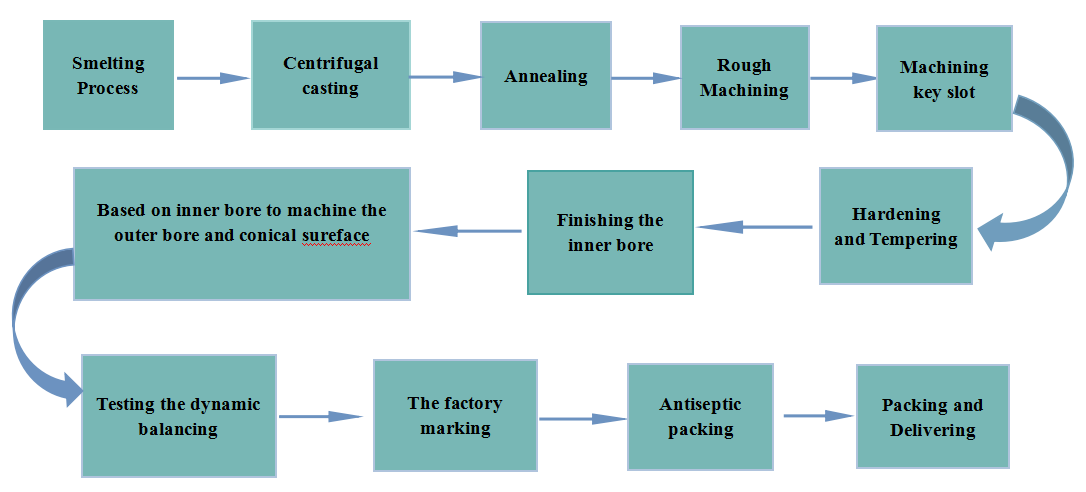
The manufacturing process combines controlled melting and casting, centrifugal casting, heat treatment, dedicated hole drilling, precision CNC machining and dynamic balancing inspection. The complete processing system is developed through continuous improvement to control the concentricity, cylindricity, symmetry and dynamic balance of the casting steel sleeve.
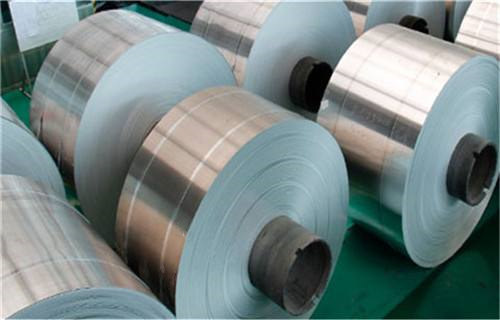
35CrMoV Material and Mechanical Properties
The 35CrMoV casting steel sleeve is heat treated by quenching and tempering to obtain the required mechanical properties. The typical performance indicators after heat treatment include hardness, tensile strength, yield strength, elongation, impact toughness and high-temperature hardness.
The typical mechanical properties are:
Hardness: HRC 48–52 at room temperature, tested by Rockwell hardness according to ASTM E18.
Tensile strength: 1500–1800 MPa at room temperature, tested according to ASTM E8.
Yield strength: 1200–1400 MPa.
Elongation: 10–15%, based on a 50 mm gauge length.
Impact toughness: 20–40 J/cm², tested by the Charpy notch impact method.
Red hardness: ≥HRC 38 at 600°C, tested after 1 hour of high-temperature holding.
These properties are important for a steel sleeve used in rolling mill machinery because the component needs to maintain adequate strength and dimensional stability during continuous mechanical operation. The final heat-treatment condition and inspection requirements can be controlled according to the customer's technical specification.
Controlled Melting and Casting Process
GW Precision uses controlled melting and casting technology for the production of casting steel sleeves. The melting and casting equipment is supported by inspection and testing procedures to control the chemical composition of the casting steel sleeve material.
Accurate control of material composition provides a reliable basis for subsequent casting, heat treatment and machining. The material inspection process is used to verify that the steel sleeve meets the specified material requirements before proceeding to subsequent manufacturing stages.
For large-size steel sleeves, the quality of the casting blank has a direct influence on the stability of later machining and the final geometric accuracy. Therefore, material control and casting quality are important parts of the complete manufacturing process.
Centrifugal Casting for Casting Steel Sleeves
Centrifugal casting is used for the casting steel sleeve to improve the quality and integrity of the inner and outer surfaces. The centrifugal casting process helps reduce the occurrence of surface defects such as cracks, slag inclusions, pores and sand holes.
The quality of the casting surface is particularly important for a large cylindrical component because subsequent machining must establish accurate inner and outer cylindrical surfaces from the casting blank. A stable casting process provides a suitable foundation for boring, turning, grinding and other precision machining operations.
After casting and preliminary inspection, the steel sleeve blank enters the subsequent machining and heat-treatment processes. The specific manufacturing route is adjusted according to the sleeve specification and customer requirements.
Heat Treatment of the Casting Steel Sleeve
Heat treatment is an important manufacturing stage for the 35CrMoV casting steel sleeve when specific mechanical properties are required.
GW Precision applies a mature heat-treatment process to steel sleeves requiring specified mechanical performance. After heat treatment, corresponding mechanical-property testing is carried out to verify the condition of the finished product.
The heat-treatment process is designed to obtain the required hardness and strength while maintaining the mechanical properties needed for the rolling mill application. Mechanical-property inspection is performed together with conventional dimensional inspection so that the product condition can be evaluated from both material performance and machining accuracy.
For this 35CrMoV casting steel sleeve, the typical heat-treated performance includes HRC 48–52 hardness, 1500–1800 MPa tensile strength, 1200–1400 MPa yield strength, 10–15% elongation, and 20–40 J/cm² impact toughness. The high-temperature hardness requirement is ≥HRC 38 at 600°C after one hour of holding.
The final heat-treatment condition is controlled according to the customer's specified mechanical-property requirements and applicable inspection criteria.
Dedicated Hole Drilling Machine
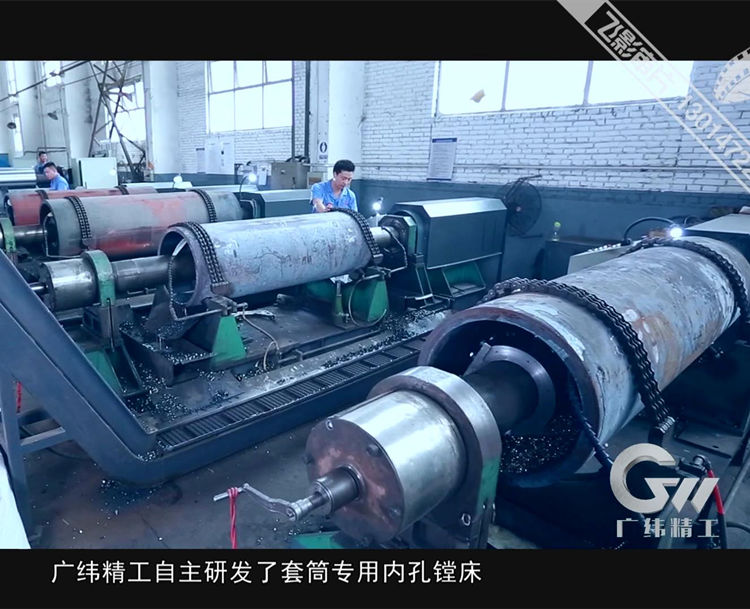
One of the important manufacturing capabilities for this casting steel sleeve is the company's independently developed dedicated hole drilling machine. The equipment was researched and developed by GW Precision and has obtained a national patent.
The dedicated machine is designed with good rigidity and high machining accuracy. Its machining structure uses a non-return clamping arrangement, helping maintain the workpiece position during the hole machining process.
The development and continuous improvement of this dedicated equipment have helped GW Precision establish an integrated processing system for large steel sleeves. The system focuses on controlling concentricity, cylindricity, symmetry and dynamic balance throughout the manufacturing process.
Specific dimensional tolerances and geometric accuracy tolerances are controlled strictly according to the customer's drawings and technical requirements rather than applying a fixed tolerance independently of the actual product design.
Precision Boring of the Steel Sleeve Blank
The casting steel sleeve blank is first processed on the dedicated hole drilling machine developed by GW Precision.
During boring, the sleeve blank can be adjusted to achieve concentricity between the front and rear ends of the aperture. This positioning method helps maintain stable cutting conditions and improve machining accuracy.
During the cutting process, the workpiece remains fixed while the tool shaft rotates to machine the inner hole. This machining method avoids errors associated with workpiece rotation, including taper and other form errors.
Stable chip removal during machining also helps improve the machined surface condition and reduces the possibility of chips scratching the processed surface. These process characteristics are important when machining large-diameter and long-length steel sleeves where machining stability directly affects the final geometric accuracy.
Double Self-Centering CNC Machining
After hole drilling and boring, the casting steel sleeve is further processed using a double self-centering CNC machine tool developed from GW Precision's long-term research and experience in high-precision machining of large-size components.
Hydraulic support chucks are installed at both ends of the sleeve. These chucks can quickly locate the two ends of the inner hole and help control the concentricity between the front and rear inner-hole sections within the permitted tolerance.
After positioning, the machine tool processes the outer cylindrical surface while controlling the concentricity between the inner and outer circles within the allowable tolerance range.
The conical circles of the inner holes at both ends are also processed and controlled to maintain concentricity within the specified tolerance. This double self-centering machining method is particularly useful for large steel sleeves because the relationship between the inner hole, outer diameter and both-end reference surfaces has a direct influence on final assembly accuracy.
Geometric Accuracy and Process Control
For a large casting steel sleeve used in copper foil rolling mill equipment, dimensional accuracy alone is not sufficient to evaluate the final product. The relationship between different machined surfaces must also be controlled.
GW Precision's integrated processing system therefore focuses on several key geometric characteristics, including concentricity, cylindricity and symmetry. These parameters are controlled throughout the processing sequence rather than being considered only during final inspection.
The dedicated hole drilling machine, double self-centering CNC machine tool and related precision machining processes work together to establish stable machining references for the steel sleeve.
The specific dimensional tolerance and geometric tolerance are determined according to the customer's drawings and technical requirements. This allows the casting steel sleeve to be manufactured for different copper foil rolling mill configurations and different equipment interfaces without applying unsupported standard dimensions.
Dynamic Balancing Test
Dynamic balancing is an important inspection item for a large rotating steel sleeve used in rolling mill machinery.
In addition to conventional dimensional inspection and mechanical-property testing after heat treatment, GW Precision performs dynamic balancing inspection to further verify the quality of casting steel sleeve products.
A ring-belt dynamic balancing machine is available for 100% dynamic balancing testing of the casting steel sleeves. The balancing inspection helps identify residual unbalance that could affect the rotating condition of the component.
For large rotating components, dynamic balance is closely related to stable operation. Therefore, dynamic balancing is incorporated into the inspection process together with dimensional accuracy, geometric accuracy and heat-treated mechanical properties.
Customized Casting Steel Sleeve for Copper Foil Rolling Mills
The 35CrMoV casting steel sleeve is manufactured for copper foil rolling mill applications and can be customized according to customer drawings and technical requirements. Available product specifications in the current data include 565×505×1600 mm and 665×605×2000 mm.
GW Precision's manufacturing process covers material and casting control, centrifugal casting, heat treatment, dedicated hole drilling, precision boring, double self-centering CNC machining and dynamic balancing inspection.
The combination of these processes is intended to provide stable control of the steel sleeve's material condition, mechanical properties, dimensional accuracy and geometric accuracy. For products requiring specific mechanical properties, heat treatment is carried out according to the applicable technical requirements, followed by corresponding mechanical-property testing.
For precision machining, the dedicated hole drilling machine developed by GW Precision provides a stable machining method for large sleeve blanks. The subsequent double self-centering CNC machining process controls the relationship between the inner and outer cylindrical surfaces and the two-end inner-hole geometry.