

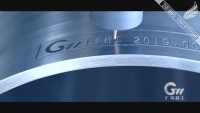

Customized 35CrMoV Steel Sleeve Of Cold Rolling Mill Machine
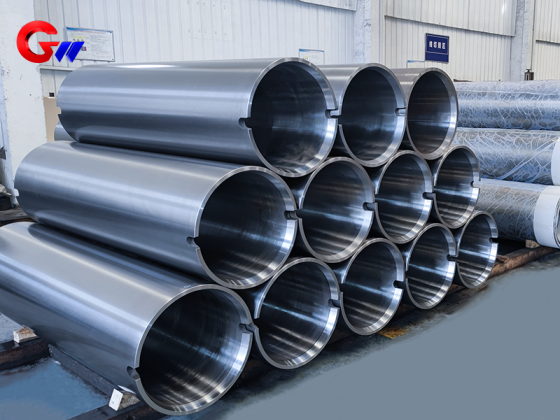
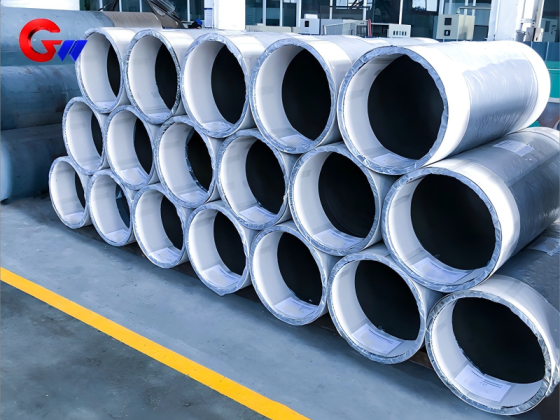
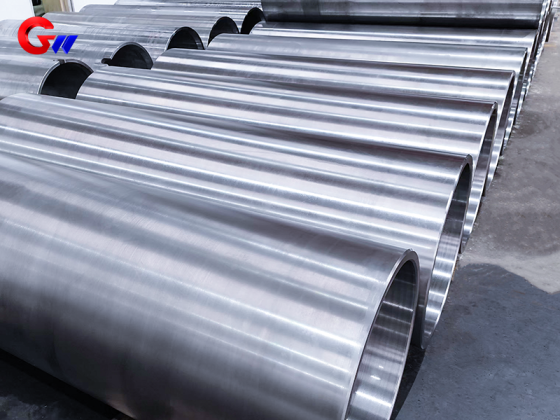
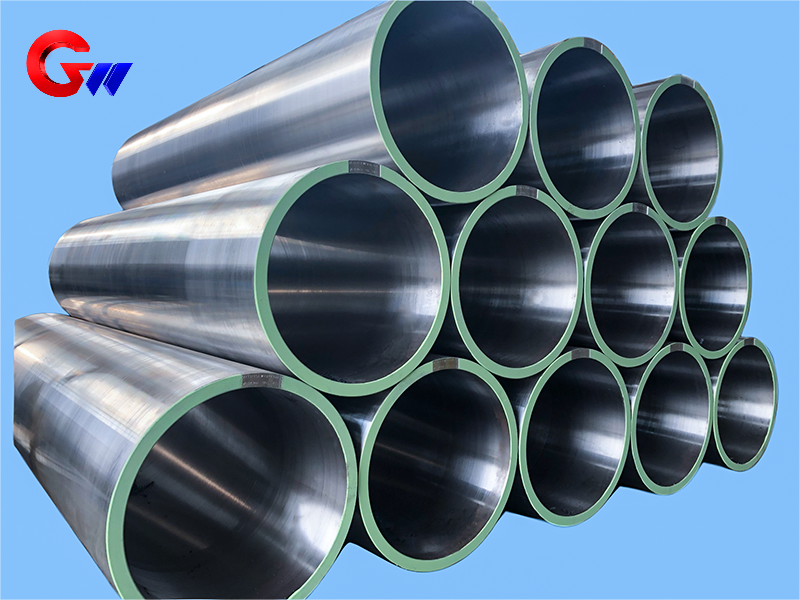
The 35CrMoV steel sleeve for cold rolling mills is a customized high-strength component for force transmission, roll support and precision positioning in cold rolling equipment. The sleeve specification is Φ502 × Φ560 × 1700 mm. In the quenched and tempered condition, the supplied mechanical properties include a tensile strength of 900–1100 MPa, yield strength of 750–950 MPa, elongation of ≥12%, impact energy of ≥50 J at room temperature, hardness of HRC 28–35, and sectional shrinkage of ≥45%. The sleeve is manufactured through controlled forging, precision machining, heat treatment, surface strengthening and inspection processes.
- GW Precision
- China,Luoyang
- Contractual Stipulation
- Anual Capacity of Steel Spool is 4000 pieces
- Information
 Customized 35CrMoV Steel Sleeve For Cold Rolling Mill Machine
The 35CrMoV steel sleeve for cold rolling mills is a customized mechanical component designed for force transmission, roll support, positioning and stable operation in cold rolling equipment. The sleeve is manufactured from 35CrMoV steel and has a specified size of Φ502 × Φ560 × 1700 mm.
During cold rolling, the sleeve is exposed to rolling torque, radial rolling force, vibration, impact loading, sliding friction and temperature changes. Therefore, its material properties, concentricity, cylindricity, dimensional accuracy, surface hardness and dynamic balance need to be controlled according to the requirements of the rolling mill.
Mechanical Properties of 35CrMoV Steel
The supplied mechanical property data applies to 35CrMoV steel in the quenched and tempered condition, using quenching followed by high-temperature tempering.
The typical performance values are:
Tensile strength: 900–1100 MPa, tested according to GB/T 228.1 (ISO 6892)
Yield strength: 750–950 MPa
Elongation: ≥12%, with a gauge length of 5d, where d is the specimen diameter
Impact energy: ≥50 J at room temperature, according to GB/T 229 (ISO 148)
Hardness: HRC 28–35 in the quenched and tempered condition, according to GB/T 230.1
Sectional shrinkage: ≥45%
These properties provide a combination of strength, toughness and deformation resistance for a steel sleeve operating under repeated mechanical loading in cold rolling equipment.
Material Comparison
Compared with other Cr-Mo alloy steels used for steel sleeve applications, 35CrMoV provides a balanced combination of strength and toughness.
For reference, the supplied material comparison gives the following typical values:
| Material | Carbon Content | Vanadium Content | Tensile Strength | Main Characteristics |
|---|---|---|---|---|
| 35CrMoV | 0.32–0.40% | 0.10–0.20% | 900–1100 MPa | Comprehensive strength and toughness, relatively low cost |
| 42CrMo | 0.38–0.45% | — | 1000–1200 MPa | Higher strength, but slightly lower toughness |
| 34CrNiMo6 | 0.30–0.38% | — | 1000–1300 MPa | High toughness and fatigue resistance, including nickel |
The selection of 35CrMoV provides a practical balance between mechanical performance and manufacturing cost for customized cold rolling mill steel sleeves.
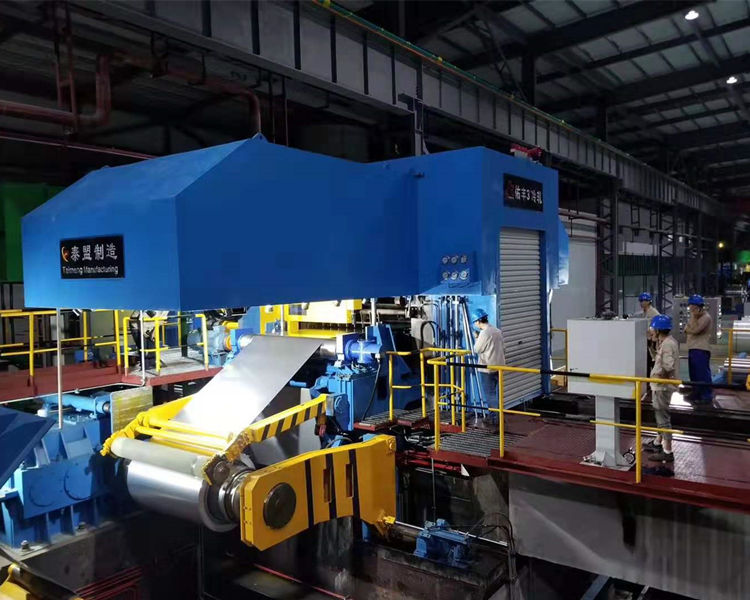
Function in Cold Rolling Mills
The customized 35CrMoV steel sleeve performs several functions in a cold rolling mill.
First, it provides force transmission and support. The sleeve connects the rolling mill and transmission shaft, transfers rolling torque that can reach 2000 kN·m or more, and withstands radial rolling forces in the range of approximately 500–3000 tons according to the supplied application data.
Second, the sleeve provides precision positioning. The specified coaxiality between the rolling mill and transmission system is ≤0.02 mm. Maintaining this relationship helps reduce alignment-related problems such as strip deviation and uneven strip thickness.
Third, the sleeve contributes to fatigue resistance and vibration buffering. Cold rolling equipment can experience vibration and impact loads, including dynamic forces caused by sudden changes in flow rate. The sleeve therefore needs sufficient strength and toughness to withstand repeated loading.
Wear Resistance and Thermal Stability
The contact surface between the steel sleeve and bearing or roller components can experience long-term sliding friction. The supplied technical requirement specifies a surface hardness of HRC 50–55 for the contact surface to improve wear resistance.
Cold rolling equipment generally operates at approximately 60–120°C under the supplied working-condition data. The sleeve needs to maintain dimensional accuracy under these temperatures, and its thermal expansion characteristics need to be compatible with the rolling mill system.
The combination of core toughness and surface strengthening allows the steel sleeve to address different requirements between the internal material structure and the working contact surface.
Forging and Blank Preparation
The manufacturing process begins with billet preparation. The supplied process specifies the use of ESR steel ingots to obtain a cleaner material condition, with S and P controlled to ≤0.015%.
The blank is formed through multi-directional forging at 1100–850°C, with a forging ratio of ≥4. This forging process is intended to eliminate casting-related defects and improve the internal structure of the material.
After forging, the blank is immediately normalized at 880°C × 2 h. Normalizing is used to refine the grain structure and establish a suitable condition for subsequent machining and heat treatment.
Precision Machining
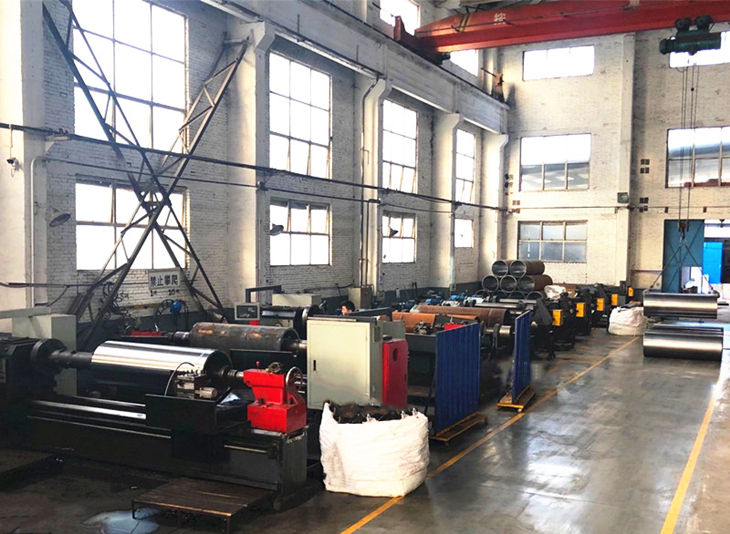
After forging and preliminary heat treatment, the steel sleeve undergoes rough and semi-precision machining.
During rough machining, the outer diameter and end faces are processed by lathe, leaving a machining allowance of 2–3 mm. Drilling and tapping are also performed, with a specified thread accuracy of 6H.
For the internal cooling channel, deep-hole drilling is used. The supplied requirement specifies a hole diameter of Φ15 ±0.2 mm and straightness of ≤0.1 mm/m.
The inner hole is then bored to IT7 accuracy, with cylindricity controlled to ≤0.01 mm. These machining operations establish the geometric foundation for the subsequent precision grinding and honing processes.
Heat Treatment and Surface Strengthening
The main heat-treatment process for the 35CrMoV steel sleeve is quenching and high-temperature tempering.
The specified quenching process is 850°C followed by oil cooling, followed by high-temperature tempering at 550°C × 4 h. The resulting hardness is specified at HRC 28–32, while maintaining the required core toughness.
For the working surface, ion nitriding can be applied. The specified surface hardness is ≥HV900, with a nitrided layer depth of 0.3–0.5 mm. According to the supplied data, this treatment can increase wear resistance by approximately five times.
Alternatively, laser quenching can be used to selectively strengthen the contact surface. The specified hardness after laser quenching is HRC 55–60, with deformation controlled to <0.03 mm.
Precision Grinding and Inspection
After heat treatment and surface strengthening, the steel sleeve undergoes precision machining. A CNC cylindrical grinder is used for precision grinding, with dimensional tolerance controlled to ±0.005 mm and surface roughness of Ra ≤0.4 μm.
The inner hole is further processed by honing, with roundness controlled to ≤0.005 mm.
Inspection includes ultrasonic testing according to the supplied EN 10228-3 standard, with no defects larger than Φ1 mm. Residual stress can also be inspected using the X-ray diffraction method, with the specified compressive stress layer reaching ≥0.2 mm.
These inspection procedures provide additional control of internal material quality, machining accuracy and residual stress for the finished steel sleeve.
Dedicated Hole Drilling Equipment
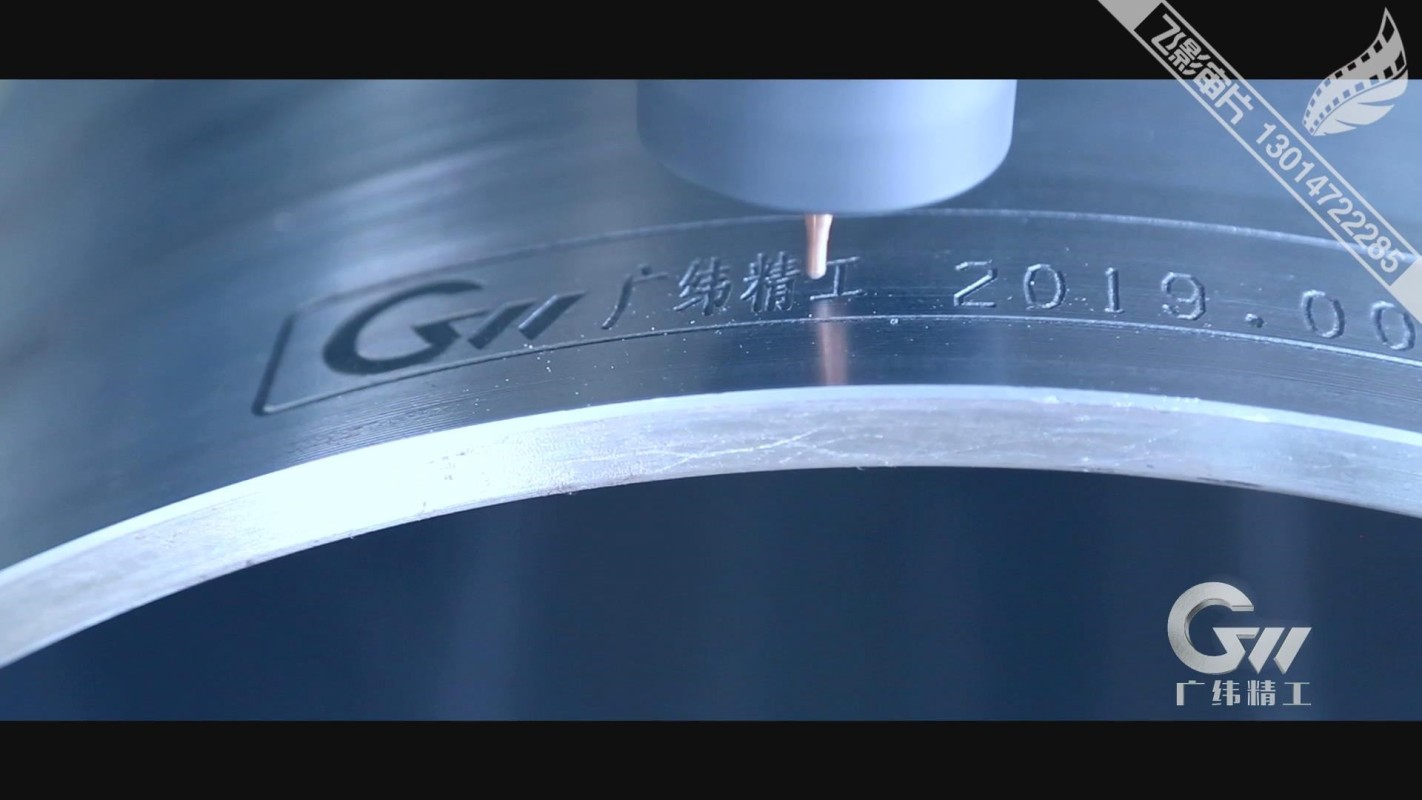
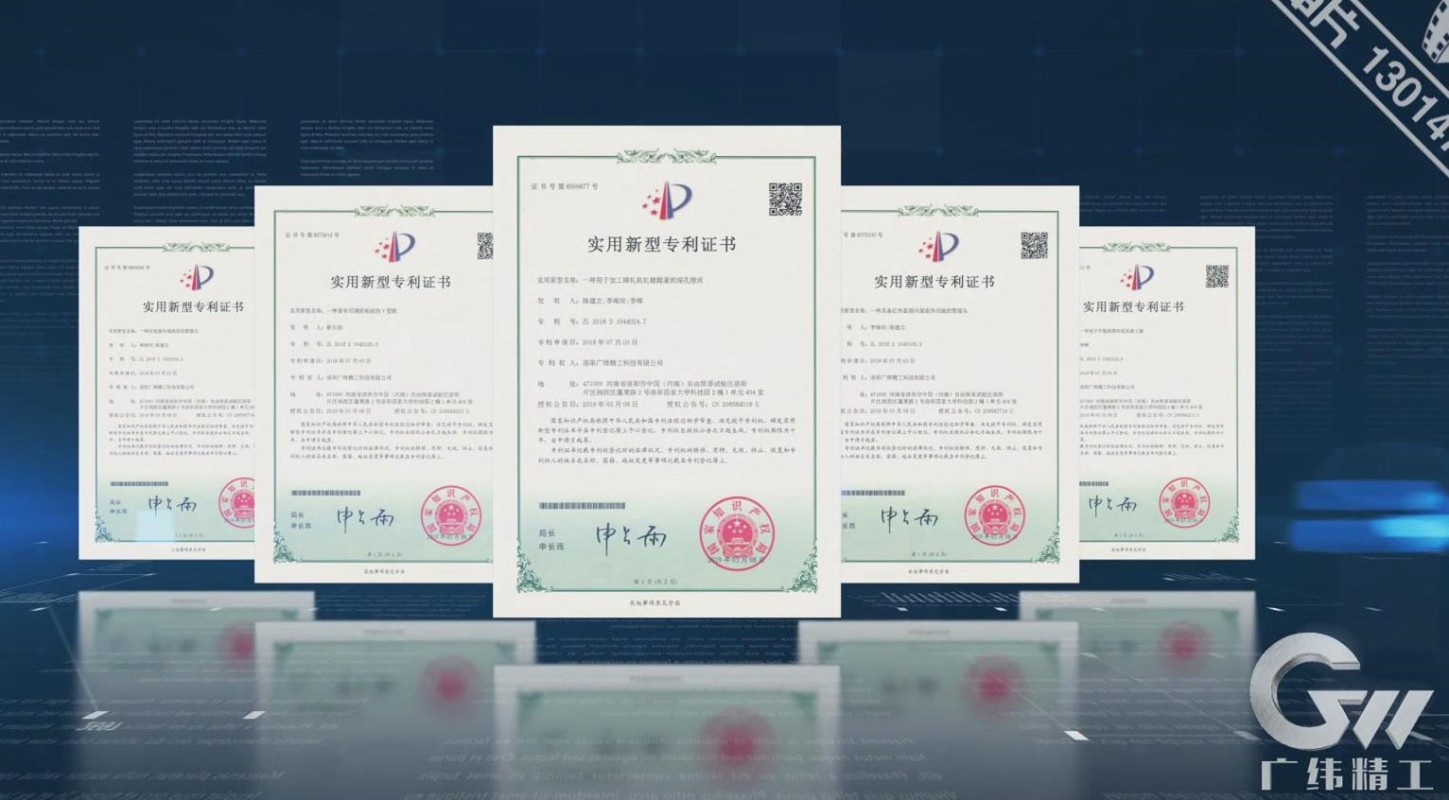
GW Precision Technology uses an independently developed dedicated hole drilling machine for steel sleeve processing. The equipment was researched and developed by the company and has obtained a national patent.
The machine is designed with good rigidity, a no-return-clamp machining structure and high machining accuracy. Through continuous improvement of the equipment and manufacturing process, GW Precision Technology has developed an integrated processing system for controlling the concentricity, cylindricity, symmetry and dynamic balance of 35CrMoV steel sleeves.
The specific dimensional tolerances and geometric accuracy requirements are controlled according to the customer's requirements for the steel sleeve. This allows the manufacturing process to be adapted to different cold rolling mill configurations and technical specifications.
Customized Cold Rolling Mill Steel Sleeve
The 35CrMoV steel sleeve is manufactured according to the technical requirements of the customer's cold rolling mill. Its specified size is Φ502 × Φ560 × 1700 mm, with controlled mechanical properties, machining accuracy, surface performance and inspection requirements.
The manufacturing route integrates ESR steel ingot preparation, multi-directional forging, normalizing, rough machining, deep-hole drilling, inner-hole boring, quenching and tempering, surface strengthening, precision grinding, honing and final inspection.
This integrated process is intended to provide a customized steel sleeve with the required combination of strength, toughness, wear resistance, dimensional accuracy and geometric accuracy for cold rolling mill applications.