

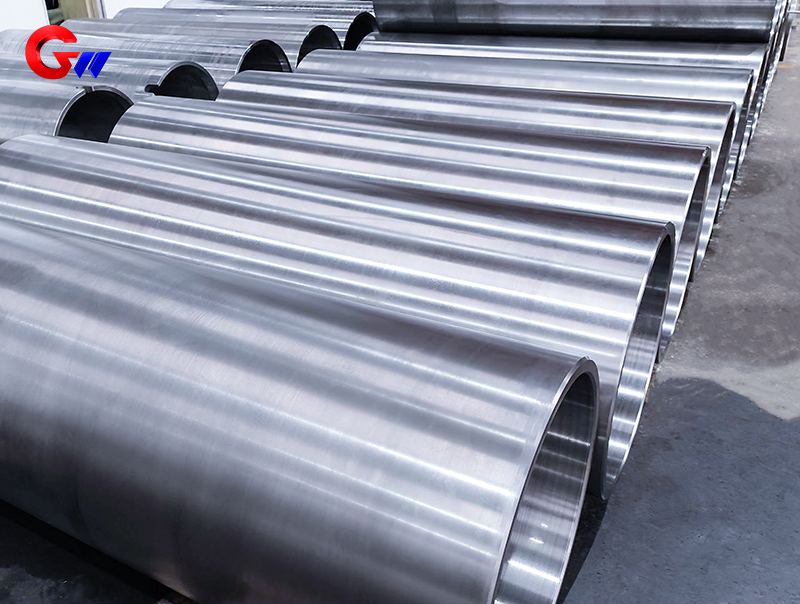
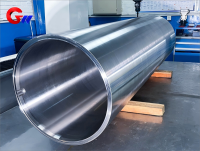
Customized 35CrMoV Steel Spool Of Cold Rolling Mill Machine
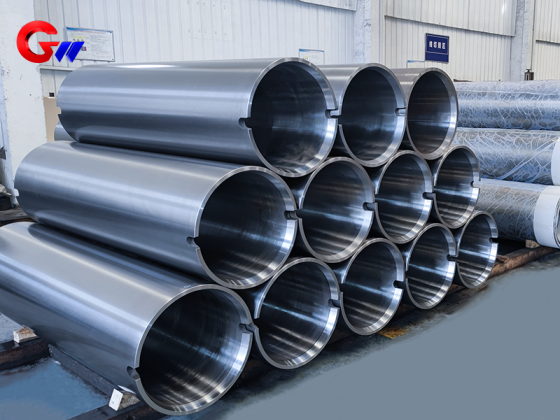
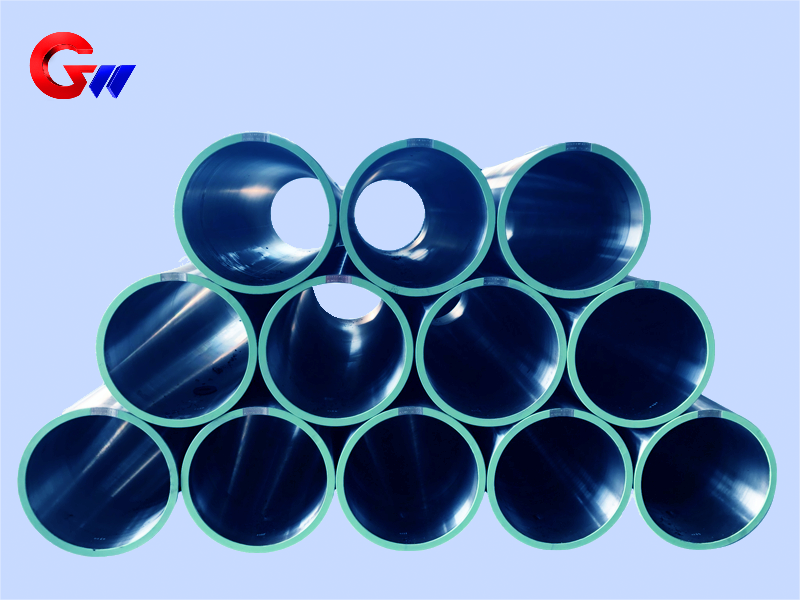
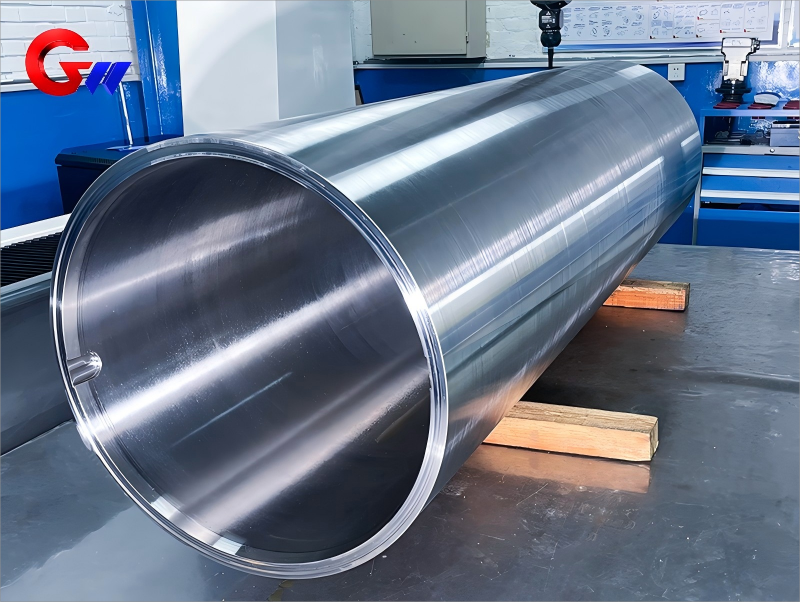
The customized 35CrMoV steel spool for cold rolling mill machines is manufactured from high-strength and high-toughness alloy structural steel. After quenching and high-temperature tempering, 35CrMoV provides a balanced combination of strength, toughness, fatigue resistance, and high-temperature performance, making it suitable for high-load and high-precision rotating components used in cold rolling mills.
GW Precision manufactures 35CrMoV steel spools according to customer drawings, equipment configuration, dimensional requirements, machining tolerances, heat treatment requirements, and inspection standards.
Product Type: Customized 35CrMoV Steel Spool
Material: 35CrMoV
Specification: 665 × 605 × 2000 mm
Application: Cold Rolling Mill
Heat Treatment: Quenching and High-Temperature Tempering
Machining: Precision Boring, Honing and Grinding
Dynamic Balance: G2.5 level, ISO 1940
- GW Precision
- China,Luoyang
- Contractual Stipulation
- Anual Capacity of Steel Spool is 4000 pieces
- Information
Customized 35CrMoV Steel Spool Of Cold Rolling Mill Machine
GW Precision customized 35CrMoV steel spool is designed for high-load and high-precision applications in cold rolling mill equipment. The steel spool is manufactured according to the customer's technical drawings and the actual requirements of the rolling mill. The supplied product specification is 665 × 605 × 2000 mm, while other dimensions can be customized according to equipment configuration and application requirements.
35CrMoV is a high-strength and high-toughness alloy structural steel. Its chromium-molybdenum-vanadium alloy system provides good hardenability, fatigue resistance, and high-temperature strength. The material is suitable for components exposed to repeated mechanical loads and continuous or high-speed rotation. Controlled sulfur and phosphorus content also helps reduce thermal brittleness and improve impact toughness.
According to the supplied material data, the typical chemical composition of 35CrMoV includes C 0.30–0.38%, Cr 0.80–1.10%, Mo 0.20–0.30%, and V 0.10–0.20%, with S/P controlled to ≤0.015%. These alloying elements provide the material foundation for the required strength, toughness, hardenability, and resistance to fatigue under demanding operating conditions.
Mechanical Properties of 35CrMoV
The mechanical properties of the steel spool material are evaluated after quenching and high-temperature tempering. The typical tensile strength is 900–1100 MPa, while the yield strength is 750–950 MPa. The elongation is ≥12% based on a gauge length of 5d, where d represents the specimen diameter. The impact energy is ≥50 J at room temperature, the hardness is HRC 28–35 in the quenched and tempered condition, and the sectional shrinkage rate is ≥45%.
The relevant testing standards supplied for these properties include GB/T 228.1 (ISO 6892) for tensile testing, GB/T 229 (ISO 148) for impact testing, and GB/T 230.1 for hardness testing.
For dynamic-load applications, the supplied technical data gives a fatigue limit of approximately 450–500 MPa for 10⁶ cycles using a smooth specimen. This fatigue performance makes the material suitable for components that experience repeated loading during rolling mill operation. Actual performance depends on material condition, heat treatment, geometry, surface condition, and operating environment.

Heat Treatment and High-Temperature Performance
Heat treatment is an important part of manufacturing the 35CrMoV steel spool. The quenching process uses heating to approximately 850–880°C followed by oil cooling to obtain the required martensitic structure. After quenching, high-temperature tempering is carried out at approximately 550–650°C.
The tempering temperature can be adjusted according to the required strength and toughness. In general, increasing the tempering temperature reduces strength while improving toughness. The final heat treatment condition therefore needs to be selected according to the mechanical performance requirements of the steel spool and its intended cold rolling mill application.
After appropriate quenching and tempering, 35CrMoV can maintain stable strength below approximately 400°C and can withstand short-term exposure to around 500°C under specified conditions. Molybdenum contributes to high-temperature strength and creep resistance, while the Cr-Mo-V alloy system supports the overall mechanical performance of the material.
Precision Machining Requirements
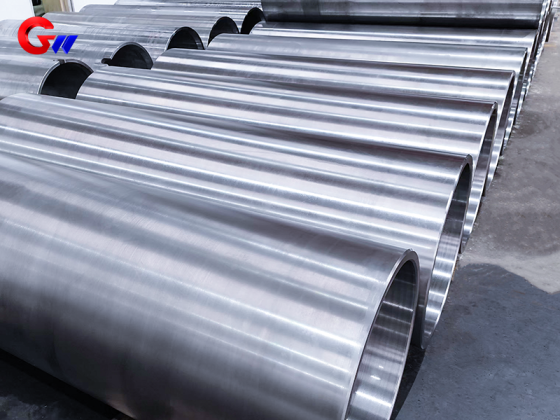
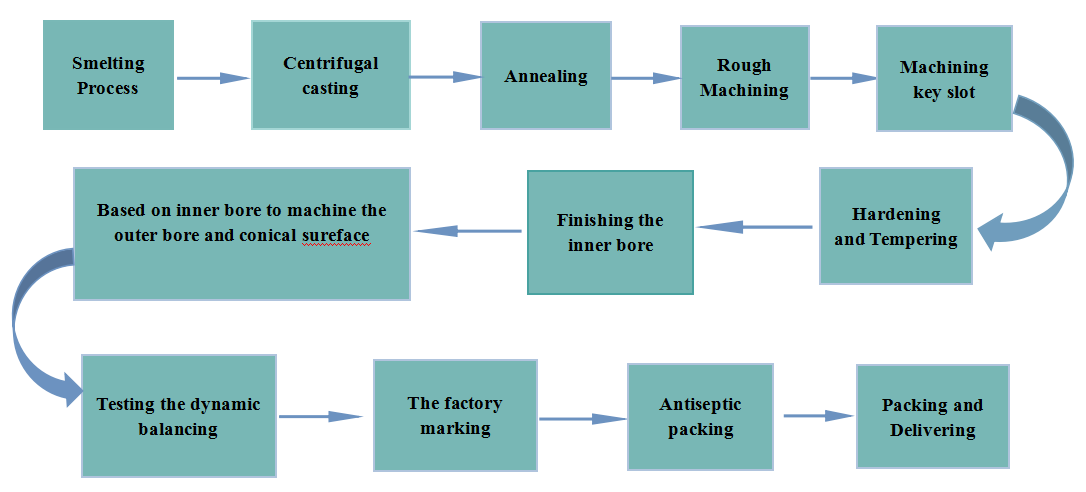
The 35CrMoV steel spool requires precision machining after heat treatment. The inner hole, outer diameter, cylindrical surfaces, and bearing mating surfaces must meet the dimensional and geometric requirements specified for the product.
The inner hole is controlled to IT6 grade, with an H6 fit requirement and surface roughness of Ra ≤0.8 μm. The outer diameter is controlled to IT7 grade with an h7 fit requirement and surface roughness of Ra ≤1.6 μm. Cylindricity is controlled to ≤0.01 mm/100 mm, while coaxiality of the bearing mating surface is controlled to ≤0.02 mm.
Precision boring and honing are used to achieve the required inner-hole dimensional accuracy and surface finish. For the outer cylindrical surface, cylindrical grinding is used to obtain the required dimensional accuracy and surface quality while reducing the risk of thermal deformation.
For a large rotating steel spool, dimensional accuracy and geometric accuracy need to be controlled together. The relationship between the inner hole, outer diameter, and rotating axis directly affects the final assembly and rotation condition. Therefore, machining datum selection, machining sequence, boring, honing, and grinding processes need to be coordinated to maintain the required cylindricity and coaxiality.
Dynamic Balance Testing and Inspection
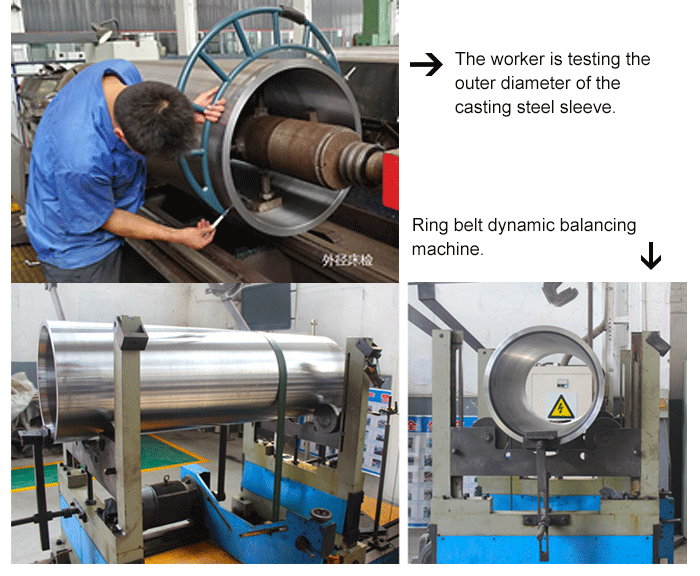
Dynamic balance is an important quality requirement for a steel spool used in rotating cold rolling mill equipment. When the spool rotates at high speed, uneven mass distribution can produce additional centrifugal force and vibration. Therefore, the finished product requires dynamic balance testing in addition to conventional dimensional inspection.
GW Precision can use a ring-belt dynamic balancing machine to perform 100% dynamic balance testing. The supplied technical requirement specifies residual unbalance up to G2.5 level according to ISO 1940.
Quality inspection also includes mechanical property testing after heat treatment and conventional dimensional inspection. The inspection process covers the critical dimensions, surface condition, geometric accuracy, material mechanical properties, and dynamic balance condition of the finished steel spool.
For customized products, inspection requirements can be confirmed according to the customer's drawings, technical specifications, quality standards, and application requirements. This allows the final inspection process to correspond directly with the actual cold rolling mill equipment.
Welding Repair Considerations
If welding repair is required for a 35CrMoV steel spool, the welding process must consider the high-strength alloy steel characteristics and its heat-treated condition. According to the supplied technical requirements, the material should be preheated to approximately 200–300°C before welding.
After welding repair, stress-relief annealing is required to reduce residual welding stress and help maintain dimensional stability. The actual welding procedure should be determined according to the repair location, material condition, welding method, heat treatment condition, and applicable technical requirements.
For precision steel spools, welding repair should be followed by appropriate inspection and, where necessary, dimensional verification to ensure that the repaired component continues to meet the required machining and assembly tolerances.
Packaging and Product Protection
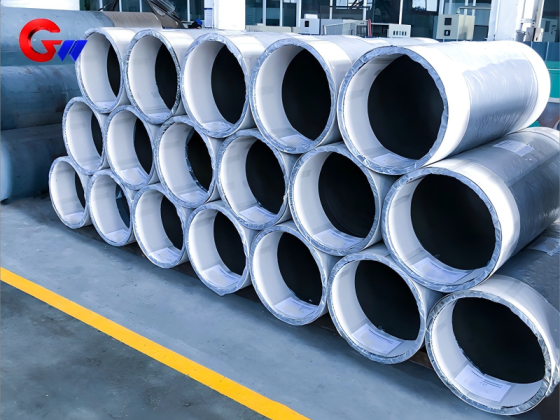
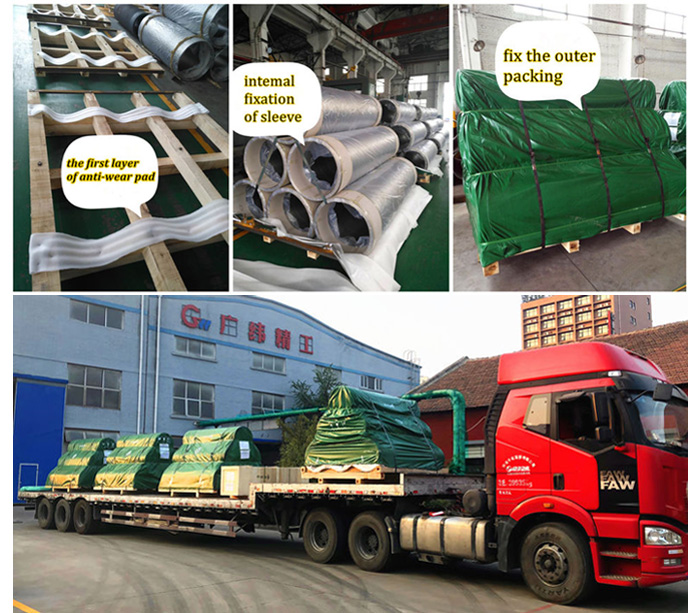
GW Precision has an experienced packaging team and established packaging procedures for precision steel spool products. Packaging is designed to protect the 35CrMoV steel spool during storage, transportation, handling, and delivery and to reduce the risk of loss or damage.
Product cleanliness is also considered during packaging. The surface of the steel spool is checked and cleaned before packing to help prevent contamination during transportation and storage.
GW Precision provides customized 35CrMoV steel spool manufacturing according to customer requirements, including material, specification, heat treatment, machining accuracy, dynamic balance, inspection, and packaging requirements. The production process is intended to provide a steel spool suitable for high-load and high-precision cold rolling mill applications while maintaining the specified material and dimensional requirements.
Key considerations for steel spool for cold rolling mills
Welding repair: 35CrMoV welding requires preheating (200-300 ℃) and stress relief annealing after welding.