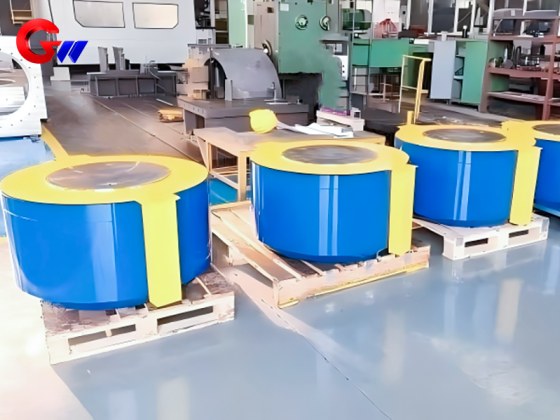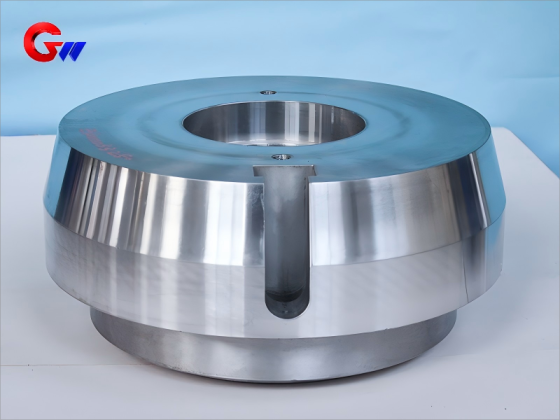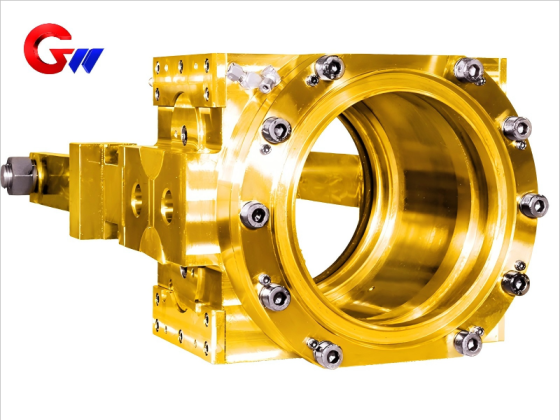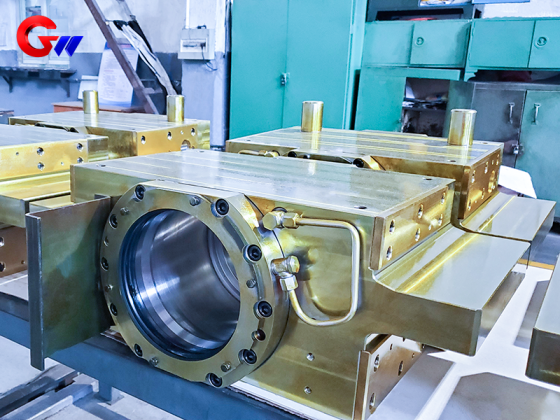



Cold Rolling Mill Machine Of The Transimit Side Work Roller Bearing Block
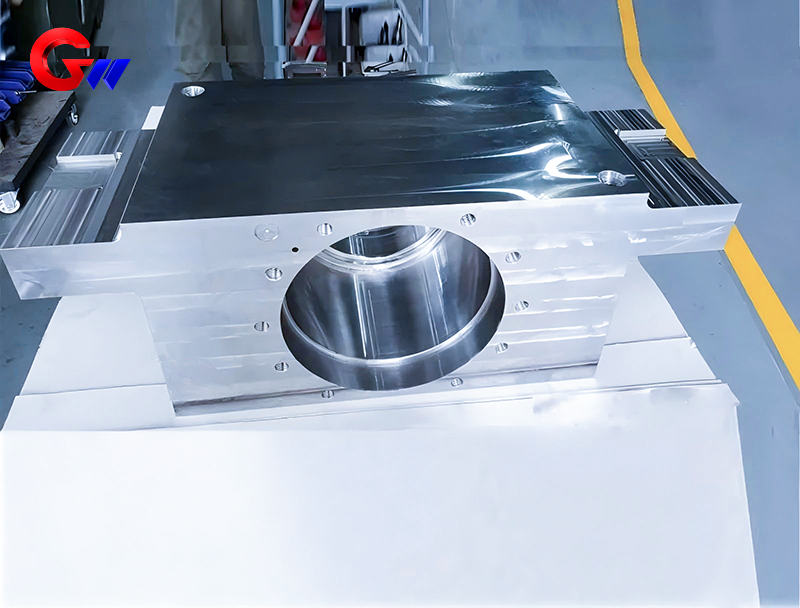
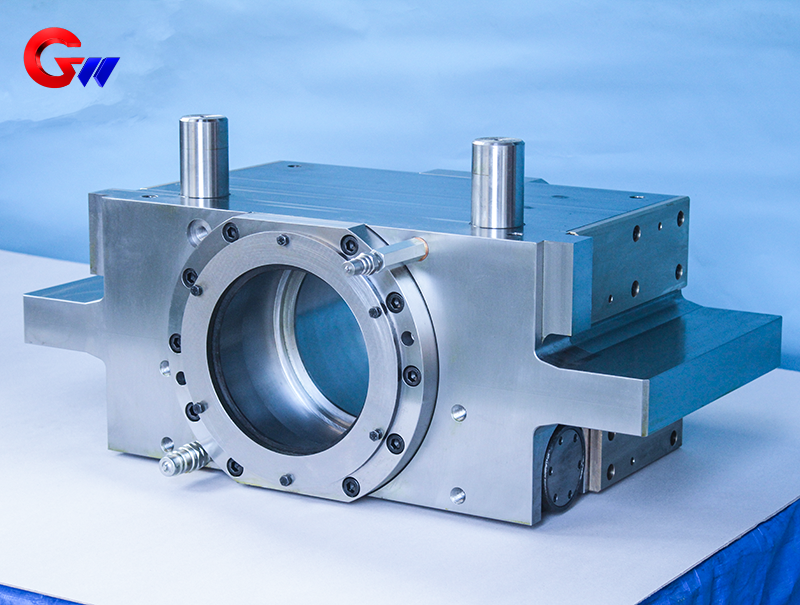
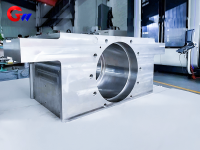
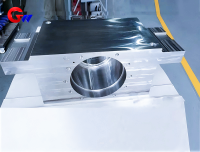
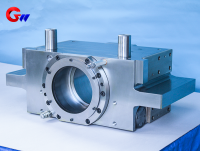
The Cold Rolling Mill Drive Side Work Roll Bearing Block is a key supporting component used to support and position the work roll on the drive side of a cold rolling mill. It helps maintain the required alignment and stability of the work roll during rolling operations while carrying radial and axial forces generated during the rolling process.
GW Precision Technology can manufacture the work roll bearing block according to specific cold rolling mill configurations, work roll dimensions, customer drawings, material requirements, and technical specifications. Standard and non-standard customized manufacturing are available.
Product Type: Drive Side Work Roll Bearing Block
Application: Cold Rolling Mill
Main Materials: Cast steel, forged steel, or other specified materials according to application requirements
Customization: Standard and non-standard customized manufacturing available
- GW Precision
- China,Luoyang
- Contractual Stipulation
- Anual Capacity is 1000 pieces
- Information
Cold Rolling Mill Drive Side Work Roll Bearing Block
The Cold Rolling Mill Drive Side Work Roll Bearing Block is an important supporting component in cold rolling mill equipment. Its main function is to sup
port and position the work roll and provide a stable structural connection between the work roll assembly and the rolling mill frame. During the rolling process, the work roll is subjected to radial and axial forces, impact loads, and operating vibration. The work roll bearing block provides the necessary support and positioning to help maintain stable roll operation.
Accurate positioning of the work roll is important for maintaining the dimensional accuracy and surface quality of rolled products. The bearing block therefore requires controlled machining of its bearing locations, mounting surfaces, holes, and other critical features. The actual dimensional and geometric requirements depend on the cold rolling mill configuration, roll dimensions, bearing arrangement, and customer technical specifications.
GW Precision Technology Co., Ltd. manufactures various rolling mill bearing blocks and other precision mechanical components. Based on long-term manufacturing experience, the company has established a mature machining process for work roll bearing block products and can provide customized manufacturing according to customer drawings and technical requirements.
Function of the Work Roll Bearing Block
The primary function of the work roll bearing block is to support the work roll during cold rolling operations. The bearing block provides the structural support required for the work roll bearing assembly and helps maintain the designed position of the roll relative to the rolling mill.
During rolling, the work roll is exposed to radial and axial forces generated by the rolling process. The bearing block transfers these forces through its supporting structure and mounting interfaces. The stability of the bearing block and the accuracy of its machined surfaces are therefore important to the overall operating condition of the rolling mill.
Precise positioning of the work roll also contributes to stable strip processing. In precision rolling applications, roll position and alignment can affect strip thickness, surface quality, and rolling stability. For this reason, the bearing hole, mounting surface, and related locating features need to be manufactured according to the specified tolerances.
The Work Roll Bearing Block can be used in different cold rolling mill configurations. Depending on the production line, applications may include precision rolling of cold-rolled strip steel, stainless steel, aluminum foil, and other metal strip products.
The component can also be used in continuous rolling lines, including acid rolling combined units, as well as reversible rolling mills and other cold rolling equipment. The exact product configuration is determined by the rolling mill structure and customer requirements.
Materials for Work Roll Bearing Block
Material selection is an important part of work roll bearing block manufacturing. The material needs to be selected according to the expected load, structural requirements, wear conditions, machining requirements, and operating environment.
The technical information provided for related rolling mill components includes forged steel grades such as 45 steel, 40Cr, and 42CrMo for work roll-related components, as well as cast steel grades such as ZG310-570 and ZG270-500 for support roll-related components. For specific work roll bearing block applications, the final material should be confirmed according to the customer drawing, equipment design, and applicable technical specification.
Common material categories for rolling mill bearing blocks can include cast iron, ductile iron, cast steel, alloy cast steel, and forged steel. Different materials provide different combinations of strength, toughness, wear resistance, machinability, and resistance to deformation.
For example, gray cast iron such as HT250 and HT300 can provide good compressive performance and machining characteristics and may be used for suitable structural applications. Ductile iron grades such as QT400-18 and QT500-7 provide a combination of strength and toughness and can be considered where improved mechanical performance is required.
Cast steel materials such as ZG270-500 and ZG310-570 provide higher load-bearing capability and can be used for heavy-duty rolling mill components. Alloy cast steel, such as ZG35CrMo, can provide improved mechanical performance through the addition of alloying elements such as chromium and molybdenum.
For applications requiring higher strength, forged steel such as 42CrMo or 34CrNiMo6 may be selected according to the specific design requirements.
The final material selection should not be separated from the actual rolling mill application. Rolling force, impact load, bearing contact conditions, wear requirements, thermal effects, product dimensions, and customer standards should all be considered when determining the appropriate material.
Machining Accuracy and Bearing Hole Control
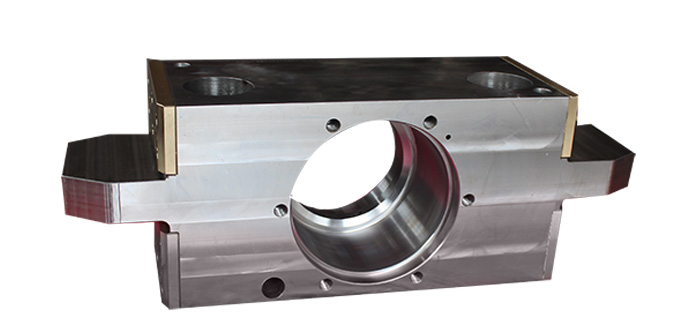
The bearing hole is one of the critical machining features of a work roll bearing block. Its dimensional accuracy, geometric accuracy, and relationship with other locating surfaces can directly affect the installation condition of the bearing assembly.
For related rolling mill bearing block applications, the machining process can include control of bearing-hole coaxiality and cylindricity. The supplied technical reference specifies coaxiality control of up to 0.02 mm for applicable bearing-hole structures. The actual tolerance for each product should be determined according to the customer drawing and technical specification.
The mating surfaces of the bearing block also require appropriate machining to achieve the required contact condition. Depending on the product design and process requirements, grinding or scraping may be applied to selected mating surfaces.
Accurate machining of the bearing hole and mating surfaces helps provide a stable installation interface for the bearing and work roll assembly. It also reduces the risk of dimensional deviation between related components during assembly.
Because cold rolling mill components often have relatively large dimensions and complex structures, process planning is important. The machining sequence needs to consider the reference surfaces, workholding method, machining allowance, hole position, and final inspection requirements.
Heat Treatment and Surface Treatment
Heat treatment can be applied according to the selected material and product requirements. For cast or forged components, annealing or normalizing may be used to reduce residual stress and provide a suitable material condition for subsequent machining.
For suitable alloy steel materials, quenching and tempering can be used to improve the overall mechanical properties of the component. The supplied technical reference includes 42CrMo as a material for which quenching and tempering may be applied, with a reference hardness of approximately HRC 28–32 after the specified treatment. The actual heat-treatment procedure and hardness requirement should be determined according to the material standard and customer technical specification.
Where additional surface wear resistance is required, surface hardening can also be considered. Depending on the application, high-frequency induction hardening or carburizing treatment may be applied to selected bearing mating surfaces.
The exact heat-treatment and surface-treatment process is determined according to the material, component structure, working conditions, and customer requirements. GW Precision does not treat one process as suitable for every product; the manufacturing route is established according to the actual technical requirements of each work roll bearing block.
CNC Machining Process
GW Precision Technology has developed a mature mechanical processing system for the production of rolling mill bearing blocks through long-term manufacturing experience.
The main machining processes for the Drive Side Work Roll Bearing Block include:
1. Vertical Machining Center
The vertical machining center can be used for major surface milling, structural machining, mounting features, and other required operations. The machining program and cutting sequence are arranged according to the product structure and drawing requirements.
2. Horizontal Boring Machine
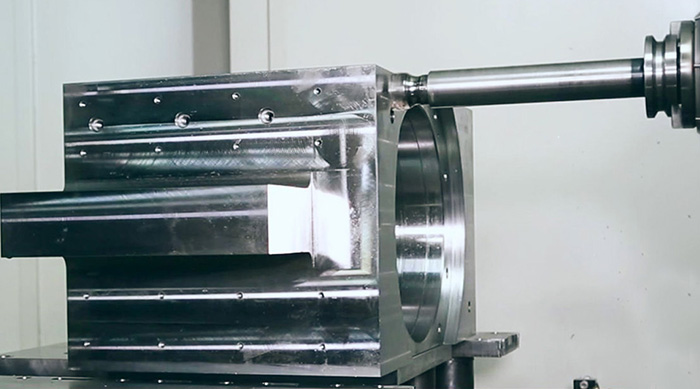
The horizontal boring machine is used for machining large or deep holes and related precision features. For bearing block products, horizontal boring provides an effective method for processing bearing holes and other critical hole locations according to the required dimensions and geometric tolerances.
3. Bench Work
After CNC machining and boring operations, bench work can be used for deburring, cleaning, fitting-related operations, and other finishing work required by the manufacturing process.
4. Final Inspection
After machining is completed, the work roll bearing block undergoes final inspection. Critical dimensions and geometric tolerances are checked according to the applicable drawing and technical requirements.
The combination of CNC machining, horizontal boring, bench work, and final inspection provides a controlled manufacturing route for different rolling mill bearing block configurations.
CNC Manufacturing Equipment
GW Precision Technology has high-precision CNC manufacturing equipment for the production of rolling mill precision components. The equipment includes a DMG DMF1800×600 five-axis machining center, horizontal machining centers, vertical machining centers, gantry machining centers, and high-precision coordinate measuring equipment.
Approximately 80% of the company's machining equipment consists of CNC machine tools. This provides the machining capability required for large, complex, and precision rolling mill components.
The use of CNC equipment allows machining programs to be developed according to individual product drawings and manufacturing requirements. Different machining strategies can be applied to different surfaces and structures while maintaining a controlled production process.
For large work roll bearing blocks, appropriate equipment selection is particularly important because the component may contain large mounting surfaces, bearing holes, complex structural features, and multiple machining references. The combination of vertical, horizontal, gantry, and five-axis machining capability provides flexibility for different product structures.
Coordinate Measuring and Quality Inspection
Quality inspection is an important part of the manufacturing process for the Cold Rolling Mill Drive Side Work Roll Bearing Block.
In addition to conventional dimensional inspection, GW Precision Technology uses a high-precision coordinate measuring machine for final inspection of bearing blocks and other precision components. The measurement accuracy can reach the 2-micron level, providing a reliable inspection basis for dimensional and geometric tolerance verification.
Coordinate measuring equipment can be used to verify critical dimensions, hole locations, geometric relationships, and other inspection requirements specified by the customer drawing.
For a work roll bearing block, inspection may focus on critical bearing-hole dimensions, coaxiality, cylindricity, mounting surfaces, locating features, and other relevant geometric tolerances. The exact inspection items depend on the product drawing and technical requirements.
Combining CNC machining, process inspection, conventional dimensional measurement, and high-precision coordinate measurement helps create a complete quality control process from manufacturing to final inspection.
GW Precision Manufacturing Capability
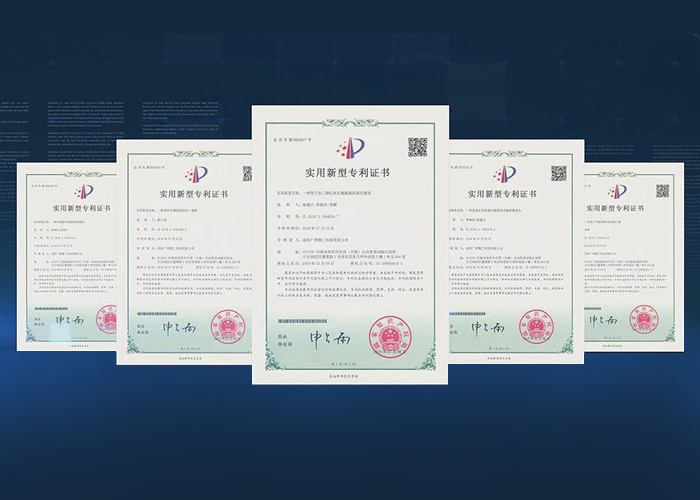
GW Precision Technology Co., Ltd. has experience in the manufacture and machining of rolling mill precision components. The company's manufacturing capabilities include CNC machining, vertical machining, horizontal boring, gantry machining, and precision dimensional inspection.
The company has developed its manufacturing processes through long-term experience with rolling mill components. Process planning is arranged according to the product structure, material, drawing requirements, machining sequence, and inspection requirements.
In addition to the Cold Rolling Mill Drive Side Work Roll Bearing Block, GW Precision can manufacture various rolling mill bearing blocks, bending blocks, and other customized precision mechanical components.
The company combines CNC manufacturing equipment, technical personnel, established machining processes, quality inspection procedures, and production management to provide customized manufacturing services for rolling mill components.
For customers requiring non-standard work roll bearing blocks, production can be organized according to supplied drawings, three-dimensional models, material specifications, dimensional requirements, and inspection standards.
Customized Work Roll Bearing Block Manufacturing
Cold rolling mills have different equipment configurations, roll sizes, bearing arrangements, and installation structures. Therefore, work roll bearing blocks are often manufactured according to the specific rolling mill design rather than using one universal dimension.
GW Precision can manufacture the Drive Side Work Roll Bearing Block according to customer drawings and technical requirements. The manufacturing process can be adjusted according to component dimensions, material selection, machining structure, required tolerances, and inspection requirements.
For customers with existing drawings, GW Precision can process the component according to the supplied technical documentation. For non-standard products, the machining process can be planned according to the actual structure and production requirements.
With CNC machining capability and high-precision inspection equipment, GW Precision provides a controlled manufacturing process for cold rolling mill work roll bearing blocks and other rolling mill precision components.