little banner

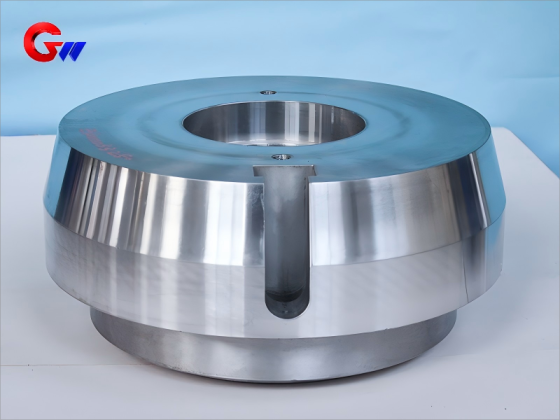
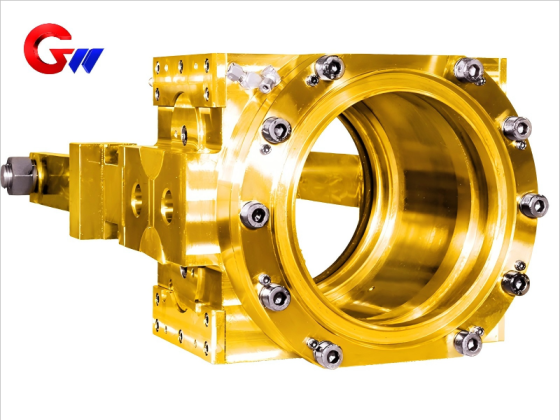
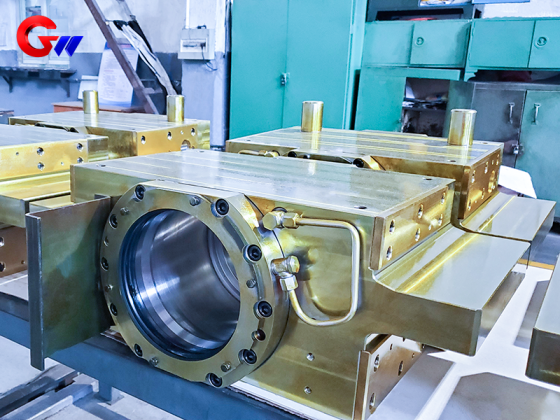
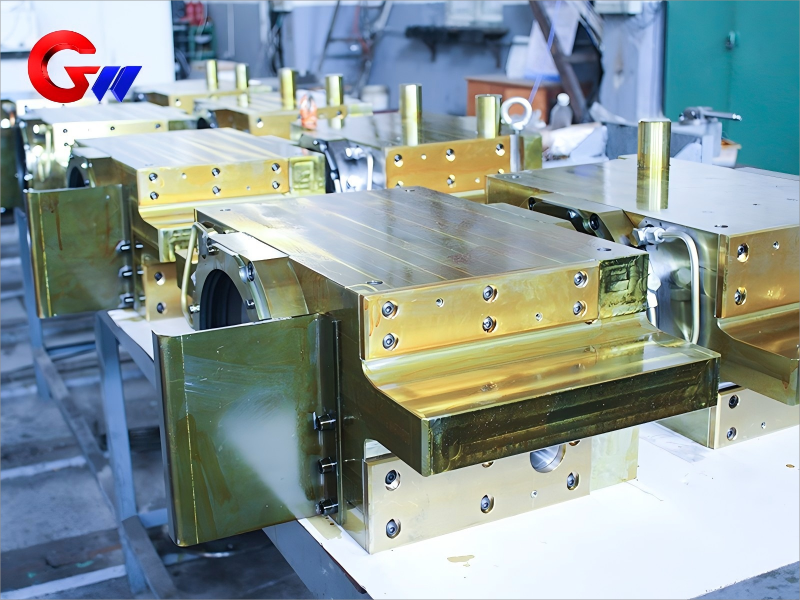
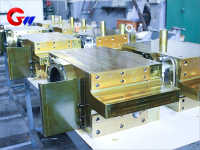
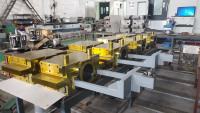
Working roll bearing seat on the operating side of the hot rolling mill

The working roll bearing seat on the operating side of a hot rolling mill is a precision-machined structural component designed to support and accurately position the work roll assembly under high-load and elevated-temperature rolling conditions.
It is designed to withstand a radial load of 1,500–4,000 kN per side and an axial force of up to 10% of the radial load. An integrated hydraulic locking interface operates at 20–25 MPa and supports a target roll change time of ≤15 minutes.
The bearing seat is also designed with thermal deformation compensation for operating temperatures of 300–600°C, with an axial thermal expansion allowance of 0.1–0.15 mm per 100°C.
Key Features
- High-load work roll support: Designed for radial loads of 1,500–4,000 kN per side and axial force up to 10% of the radial load.
- Hydraulic quick-roll-change interface: Integrated hydraulic locking mechanism operating at 20–25 MPa, with roll change time of ≤15 minutes.
- Thermal deformation compensation: Axial expansion allowance of 0.1–0.15 mm/100°C for operating temperatures of 300–600°C.
- Precision bearing interface: Bearing-hole accuracy to H6, with a specified tolerance of ±0.015 mm.
- Controlled assembly accuracy: Tapered roller bearing axial preload of 0.05–0.08 mm and labyrinth seal radial clearance of 0.3–0.5 mm.
Brand: GW Precision
Product Origin: Luoyang, China
Delivery Time: According to contractual agreement
Supply Capacity: Available according to production requirements

  • Guangwei Manufacturing Precision
  • Henan,Luoyang
  • Contractual Stipulation
  • Anual Capacity is 500 pieces
  • Information

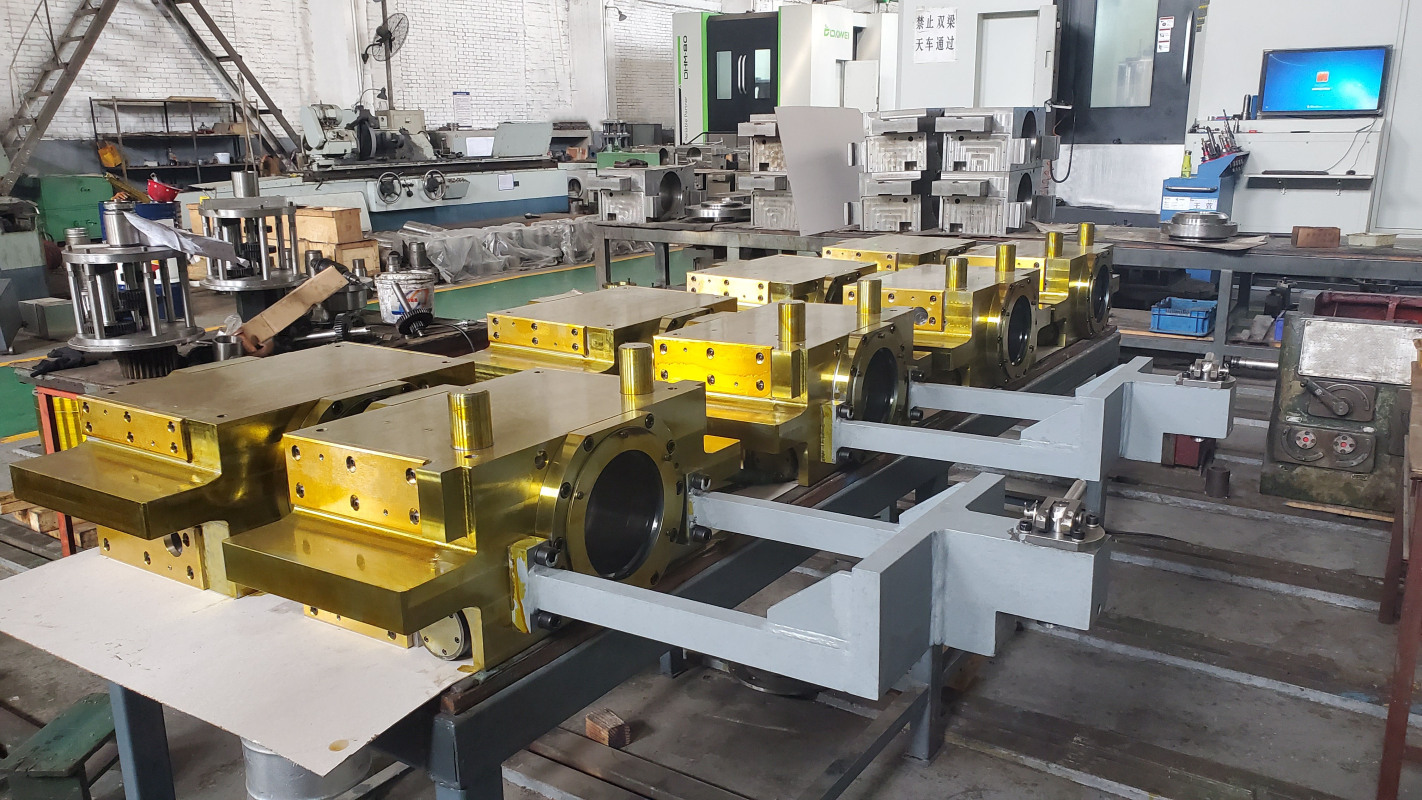
Working roll bearing seat on the operating side of the hot rolling mill

Working Conditions and Functional Requirements

The working roll bearing seat on the operating side of a hot rolling mill is designed to provide structural support, accurate roll positioning, and reliable bearing installation for the work roll assembly.

During hot rolling, the bearing seat is exposed to substantial radial and axial forces, repeated impact loading, thermal variation, and continuous operating cycles. Its structural design therefore needs to maintain the required relationship between the work roll, bearing assembly, hydraulic locking mechanism, and mill housing.

The specified radial load is 1,500–4,000 kN per side, while the axial force is controlled to a maximum of 10% of the radial force. These load requirements provide the basis for material selection, structural design, machining accuracy, and assembly control.


Quick Roll Change Interface

The operating-side structure incorporates an integrated hydraulic locking mechanism with a working pressure of 20–25 MPa.

The hydraulic interface is designed to support efficient roll replacement, with a specified roll change time of ≤15 minutes. Reliable hydraulic locking is important for maintaining the position of the work roll during rolling while also allowing efficient maintenance and production changeover.


Thermal Deformation Compensation

The hot rolling mill operates under elevated-temperature conditions, with a specified rolling temperature range of 300–600°C.

Thermal expansion can influence the dimensional relationship between the bearing seat, bearing assembly, work roll, and mill housing. To accommodate this effect, an axial thermal expansion allowance of 0.1–0.15 mm per 100°C is reserved in the design.

This compensation requirement helps reduce the influence of temperature-related dimensional changes on roll positioning and bearing operation during continuous production.


work roll bearing seat

Material and Heat Treatment Specification

Main Material

The primary material specified for the working roll bearing seat is ZG35CrNiMo cast steel with an optimized chemical composition.

This alloy steel is selected for applications where the component must combine high structural strength, toughness, thermal stability, and resistance to repeated mechanical loading.


Chemical Composition

ElementSpecification
Carbon (C)0.32–0.38%
Chromium (Cr)0.8–1.2%
Nickel (Ni)1.0–1.5%
Molybdenum (Mo)0.2–0.4%

The alloying system is designed to provide suitable mechanical performance for demanding rolling applications. Chromium, nickel, and molybdenum contribute to the strength and toughness characteristics required for a large structural component operating under repeated load.

Material Performance Characteristics

The specified material performance includes:

  • High-temperature yield strength: σ₀.₂ ≥ 550 MPa at 500°C

  • Low-temperature impact energy: AKV ≥ 50 J at −20°C

The high-temperature yield strength is particularly important for a hot rolling mill, where the surrounding equipment may experience significant thermal influence during production.

Maintaining sufficient yield strength at elevated temperature helps the bearing seat resist permanent deformation and maintain its structural geometry.

The specified low-temperature impact performance provides additional toughness assurance during lower-temperature handling, storage, and operating conditions.

Key Component Materials and Surface Treatment

The bearing assembly incorporates different material and surface-treatment configurations according to the function of each component.

ComponentMaterialHeat / Surface Treatment
Bearing seat bodyZG35CrNiMoQuenching and tempering + stress-relief treatment + shot peening, Sa2.5
Wear-resistant lining plate42CrMo4Induction hardening + hard chromium plating, 30–50 μm
Sealing component316L stainless steelSolution treatment + electrolytic polishing

The ZG35CrNiMo bearing seat body is quenched and tempered, followed by stress-relief treatment and shot peening strengthening. The specified surface preparation is Sa2.5.

The wear-resistant lining plate uses 42CrMo4 and receives induction hardening followed by hard chromium plating with a specified thickness of 30–50 μm.

The sealing component uses 316L stainless steel, with solution treatment and electrolytic polishing applied to achieve the required material and surface characteristics.

This combination of structural material, wear-resistant components, and treated sealing surfaces provides a coordinated solution for the operating conditions of the hot rolling mill.


Heat Treatment Process

Quenching

The specified quenching process is:

850 ± 10°C × 4 h

Oil cooling is used, with a specified cooling rate of:

≥80°C/s

Controlled quenching provides the required metallurgical structure and supports the strength and dimensional stability requirements of the bearing seat.

Tempering

The tempering process is:

580 ± 10°C × 6 h

Air cooling is applied after tempering, with hardness controlled within:

HB 280–320

The combination of quenching and tempering provides a balance between strength and toughness while helping the component maintain suitable mechanical properties under repeated rolling loads.


Cryogenic Treatment

A cryogenic treatment is specified at:

−80°C × 2 h

The purpose of this treatment is to improve dimensional stability and reduce potential dimensional changes during subsequent service.

For a precision work roll bearing seat, dimensional stability is important because changes in critical interfaces can influence bearing installation and work roll alignment.

Mechanical Machining and Assembly Accuracy

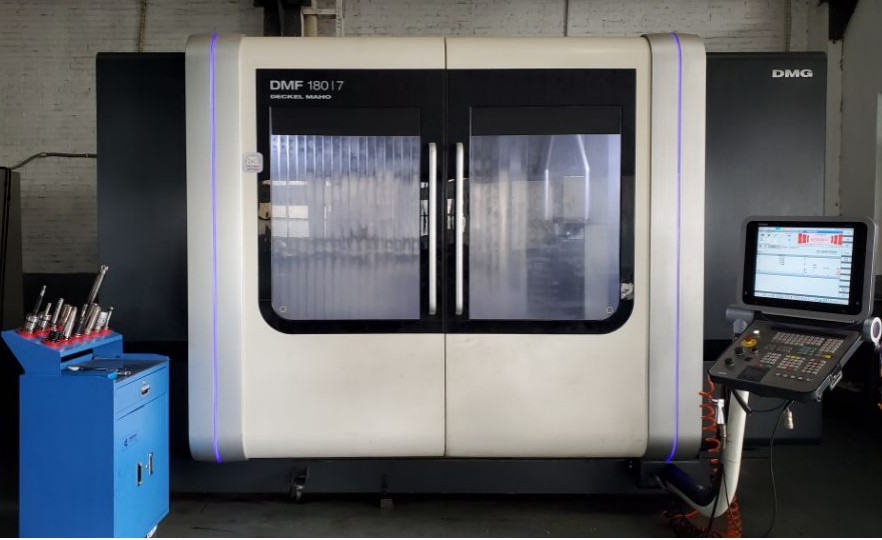
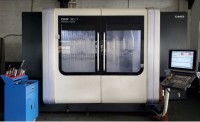
Precision machining is an important part of the manufacturing process for the working roll bearing seat.

Critical functional surfaces and interfaces are controlled according to defined dimensional tolerances and inspection methods.

Critical Dimensional Tolerances

ProjectToleranceTesting Method
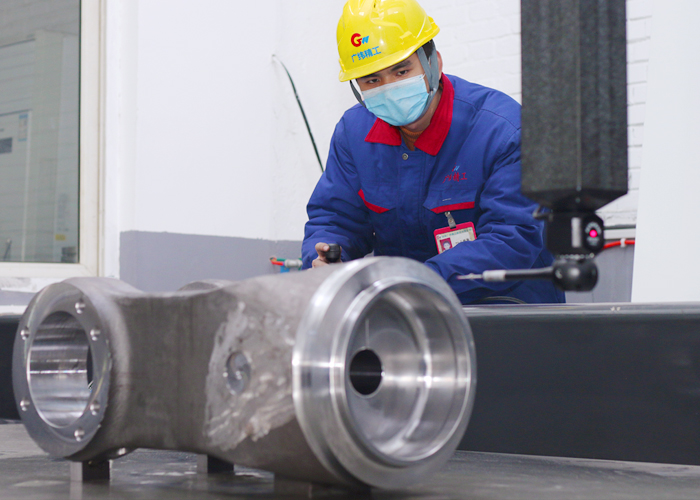
Bearing-hole diameterH6, ±0.015 mmPneumatic gauge + coordinate measuring system
Installation-surface flatness≤0.02 mm/mElectronic level
Hydraulic oil-circuit cross-hole chamferR0.5 ±0.1 mmIndustrial endoscope

The bearing-hole diameter is controlled to H6, with a specified dimensional tolerance of ±0.015 mm.

This precision is important for establishing the correct bearing fit and maintaining the positioning relationship between the work roll, bearing, and supporting structure.

The installation-surface flatness requirement is ≤0.02 mm/m, helping control mounting accuracy and reduce installation-related deviation.

The hydraulic oil-circuit cross-hole chamfer is controlled to R0.5 ±0.1 mm and can be inspected using an industrial endoscope.


hot rolling mill

Assembly Requirements

The assembly process of the hot rolling mill bearing seat includes controlled bearing preload and sealing clearance.

Bearing Preload

For tapered roller bearings, the specified axial preload is:

0.05–0.08 mm

The preload is measured using a dial gauge.

Correct bearing preload is important for controlling bearing positioning, load distribution, and operating stability. Excessive or insufficient preload can affect bearing performance and service life, so the specified assembly condition should be verified during final installation.

Sealing Clearance

For the labyrinth sealing arrangement:

  • Radial clearance: 0.3–0.5 mm

  • Axial clearance: 1.0–1.2 mm

Controlled sealing clearance helps establish an appropriate relationship between the rotating and stationary components while supporting the required sealing function.

Precision Inspection and Quality Control

GW Precision applies process control and precision inspection throughout the manufacturing of the work roll bearing seat.

Inspection focuses on critical functional dimensions, bearing interfaces, installation surfaces, hydraulic passages, and assembly-related features.

The bearing-hole dimension is verified using a pneumatic gauge and coordinate measurement equipment. Installation-surface flatness is checked using an electronic level, while internal hydraulic passages and cross-hole features can be inspected using an industrial endoscope.

The inspection process is designed to verify that critical dimensions and geometrical features remain within the specified requirements before final assembly or delivery.

For components operating in a hot rolling mill, dimensional accuracy and structural stability are closely related to roll alignment and bearing performance. Controlled inspection therefore provides an important basis for maintaining consistent manufacturing quality.

Structural Reliability for Continuous Rolling

The operating-side bearing seat is exposed to repeated mechanical and thermal loads throughout the rolling cycle.

In four-high hot rolling applications, the component must support the work roll while maintaining accurate positioning at rolling speeds of up to 12 m/s and strip widths of up to 2,200 mm.

In reversible roughing mill applications, the component must accommodate rolling-force fluctuations of ±25% and impact loading occurring at a frequency of at least 5 times per minute.

These conditions place particular importance on material strength, heat-treatment stability, machining accuracy, bearing fit, and assembly control.

The combination of optimized ZG35CrNiMo material, controlled heat treatment, precision machining, and defined assembly tolerances provides a manufacturing basis for reliable operation under demanding rolling conditions.

Manufacturing Capability

GW Precision has accumulated extensive experience in the production and machining of large bearing seat components for industrial rolling equipment.

The manufacturing process integrates material control, heat treatment, precision machining, dimensional inspection, assembly-related verification, and final quality control.

The company continues to improve production and processing methods by applying advanced manufacturing and management practices within the industry.

For customers requiring customized hot rolling mill bearing-support components, material selection, machining requirements, dimensional tolerances, bearing configuration, and assembly parameters can be coordinated according to the actual equipment design and operating conditions.


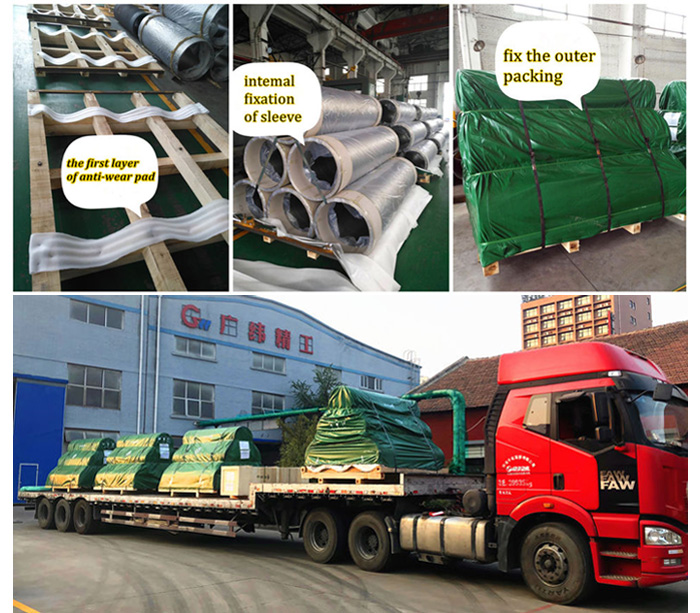
Packing

bearing seat


Get the latest price? We'll respond as soon as possible(within 12 hours)
This field is required
Required and valid email address
This field is required
For a better browsing experience, we recommend that you use Chrome, Firefox, Safari and Edge browsers.