



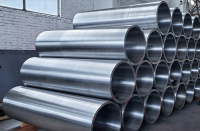
Customized 35CrMoV Steel Sleeve Of Aluminum Strip Mill Machine
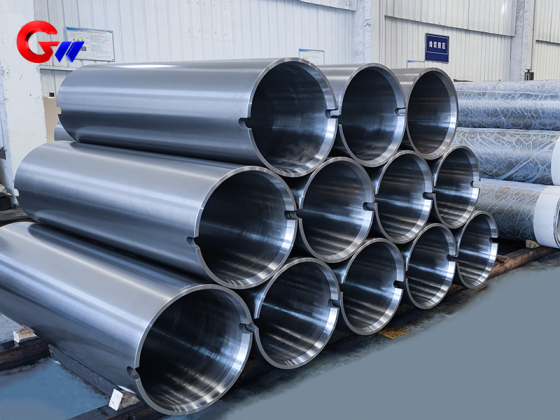
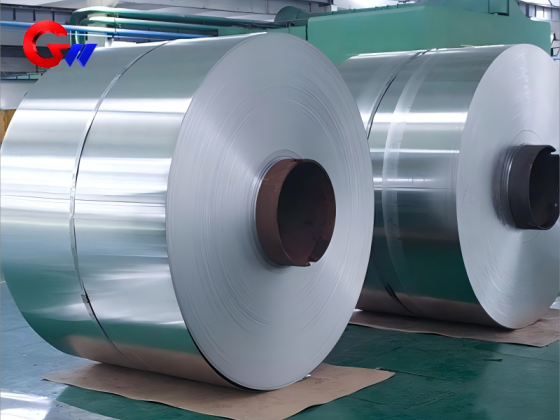
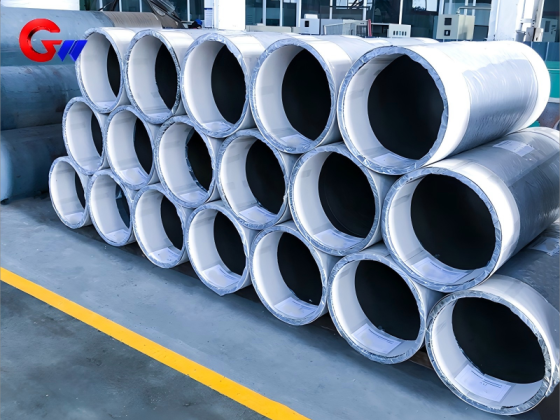
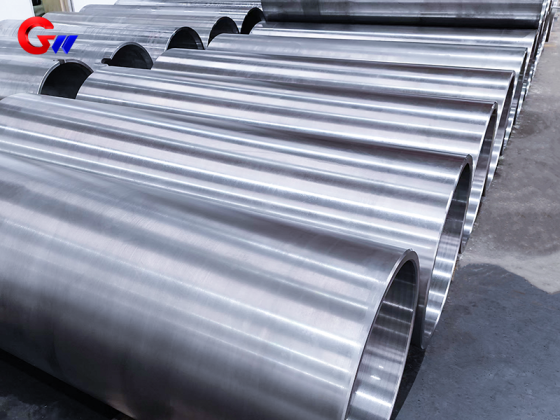
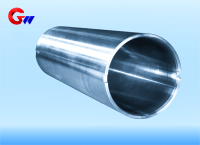
35CrMoV Steel Sleeve is widely used in aluminum foil, aluminum plate, stainless steel foil and strip rolling applications. For high-precision rolling equipment, sleeve concentricity, dynamic balance and dimensional stability are important performance requirements. The 35CrMoV steel sleeve blank manufactured by GW Precision Technology is produced by centrifugal casting, providing a suitable starting structure for subsequent heat treatment, precision machining and surface engineering.
- GW Precision
- China,Luoyang
- Contractual Stipulation
- Anual Capacity of Steel Spool is 4000 pieces
- Information
Customized 35CrMoV Steel Sleeve Of Aluminum Strip Mill Machine
The 35CrMoV steel sleeve for aluminum strip rolling mills is a customized high-strength and wear-resistant component developed for rolling equipment requiring high dimensional accuracy, stable rotation and high surface quality. Steel sleeves used in aluminum foil, aluminum plate, stainless steel foil and strip rolling applications are exposed to mechanical loading, thermal effects, rolling oil and relative micro-motion. Therefore, the manufacturing process needs to consider material performance, concentricity, dynamic balance, surface hardness and dimensional stability together.
The 35CrMoV steel sleeve blank manufactured by GW Precision Technology is obtained by centrifugal casting. The centrifugal casting blank provides the basis for subsequent heat treatment, machining and surface engineering processes. The finished sleeve can be customized according to the dimensions and technical requirements of the customer's aluminum strip rolling equipment.
Application in Aluminum Strip Rolling Mills
In six-high and twelve-high rolling mills, the customized 35CrMoV steel sleeve can be used in conjunction with intermediate rolls or support rolls. One of its main functions is to reinforce roll support and withstand the radial bending force generated during aluminum strip rolling. The supplied application data indicates a typical load range of 300–600 MPa.
For high-speed rolling equipment, maintaining dimensional and dynamic accuracy is also important. At rolling speeds of approximately 10–25 m/s, the sleeve is designed to support control of roll-gap fluctuation to ≤0.005 mm. This requirement places particular importance on concentricity, machining accuracy and dynamic balance.
The sleeve also participates in thermal management during rolling. Rolling friction generates heat, and the instantaneous temperature in the contact area can reach approximately 200–250°C. The material and surface condition therefore need to remain stable under repeated thermal and mechanical loading.
Working Conditions in Aluminum Rolling
Aluminum rolling creates specific requirements for steel sleeve performance. Aluminum chips or material particles may adhere to the working surface, so the supplied technical specification calls for a surface hardness of ≥HRC45 to improve resistance to adhesion and surface wear.
The sleeve may also operate in an emulsion-based rolling oil environment with a pH of approximately 8–10. Corrosion resistance is therefore considered in the surface engineering design, particularly where the sleeve surface is exposed to rolling fluid for extended periods.
Mechanical loading is another important consideration. The application data specifies more than 10 load cycles, indicating a high fatigue-life requirement for the sleeve. In addition, micro-motion wear can occur at the bearing mating surface, with a specified relative sliding amount of <50 μm. The sleeve therefore requires a combination of structural strength, surface hardness and resistance to micro-motion wear.
35CrMoV Material Selection
The sleeve uses 35CrMoV steel, selected for its combination of strength, toughness, wear resistance and suitability for heat treatment.
The typical chemical composition supplied for this material is:
C: 0.32–0.38%
Cr: 1.0–1.3%
Mo: 0.4–0.6%
V: 0.1–0.2%
Vanadium is added to form MC-type carbides and refine the grain structure. The supplied material data indicates a refined grain size corresponding to ASTM grades 10–12.
After quenching and tempering, the specified tensile strength is ≥1100 MPa. The material data also specifies a fracture toughness of KIC ≥90 MPa·m¹/². For elevated-temperature conditions, the yield-strength retention rate is specified as >85% at 300°C.
These properties provide the material basis for a steel sleeve subjected to repeated mechanical loading, thermal effects and surface wear during high-speed rolling.
Heat Treatment and Dimensional Stability
The main heat-treatment process includes quenching and tempering.
For quenching, the specified process is 890°C × 2 h, followed by water-air alternating cooling. The tempering process is 580°C × 3 h, with oil cooling specified to avoid the second type of tempering brittleness.
Dimensional stability is further addressed through additional treatment processes. The supplied process data specifies cryogenic treatment at −196°C for 24 h, with residual austenite controlled to <3%.
A subsequent time treatment at 200°C × 8 h is used to eliminate processing stress. These treatments are intended to improve dimensional stability and reduce the influence of residual stress on the finished steel sleeve.
Surface Strengthening and Corrosion Protection
Surface engineering can be applied according to the required working conditions. The supplied strengthening options include ion nitriding and laser quenching.
For ion nitriding, the specified white bright layer thickness is 20–30 μm, with surface hardness of HV1100–1300. This high surface hardness can improve resistance to wear and micro-motion damage.
Laser quenching can provide a hardened strip with a width of 5–8 mm and a hardened depth of 1.2–1.5 mm. This process can be selected where localized surface strengthening is required.
For corrosion protection, the supplied options include QPQ salt bath composite treatment and nanocomposite coating. QPQ treatment is specified to provide corrosion resistance 2–3 times higher than chrome plating. A nanocomposite coating such as TiAlN + MoS₂ can also be applied, with a specified friction coefficient of <0.1.
Composite Surface Engineering Process
For applications requiring multiple surface-performance characteristics, the supplied composite reinforcement process consists of four stages:
A. Sandblasting treatment, Sa3.0 level → B. Ion nitriding → C. Laser texturing → D. Magnetron sputtering coating
The final coating can use a CrN/AlCrN multilayer structure with a total coating thickness of 8–10 μm. The specified bonding force is ≥80 N, measured by scratch testing.
This surface-engineering route combines surface preparation, nitriding, laser texturing and physical vapor deposition coating to improve the working surface condition of the steel sleeve. The specific treatment combination can be selected according to the rolling application and required wear and corrosion performance.
Precision Requirements for Steel Sleeves
For aluminum strip and foil rolling equipment, sleeve concentricity and dynamic balance are critical because the sleeve operates as part of a rotating assembly. At rolling speeds of 10–25 m/s, deviations in concentricity or dynamic balance can influence rotating stability and roll-gap control.
GW Precision Technology therefore considers the blank manufacturing process, heat treatment, dimensional stability, precision machining and surface engineering as connected stages rather than independent operations.
The centrifugal casting blank provides the initial component form, while subsequent heat treatment and machining establish the required mechanical and geometric condition.
The final 35CrMoV steel sleeve can be manufactured according to customer drawings and application requirements for aluminum strip rolling equipment. Material selection, heat treatment, surface strengthening and coating can be combined according to the required operating environment.
Customized Manufacturing by GW Precision Technology
Luoyang Guangwei Precision Technology Co., Ltd. is located on the western side of Jianxi District, Luoyang City, and steel sleeves are one of the company's main product categories.
GW Precision Technology manufactures customized steel sleeves for industrial rolling applications. For the 35CrMoV steel sleeve, the manufacturing route can incorporate centrifugal casting of the blank, quenching and tempering, dimensional stability treatment, precision machining and surface engineering.
The product is intended for aluminum foil, aluminum plate, stainless steel foil and strip rolling applications where high strength, wear resistance, concentricity, dynamic balance and surface performance are required. By combining the material characteristics of 35CrMoV steel with application-specific heat treatment and surface engineering, the sleeve can be configured for different rolling equipment and working conditions.